Painted route
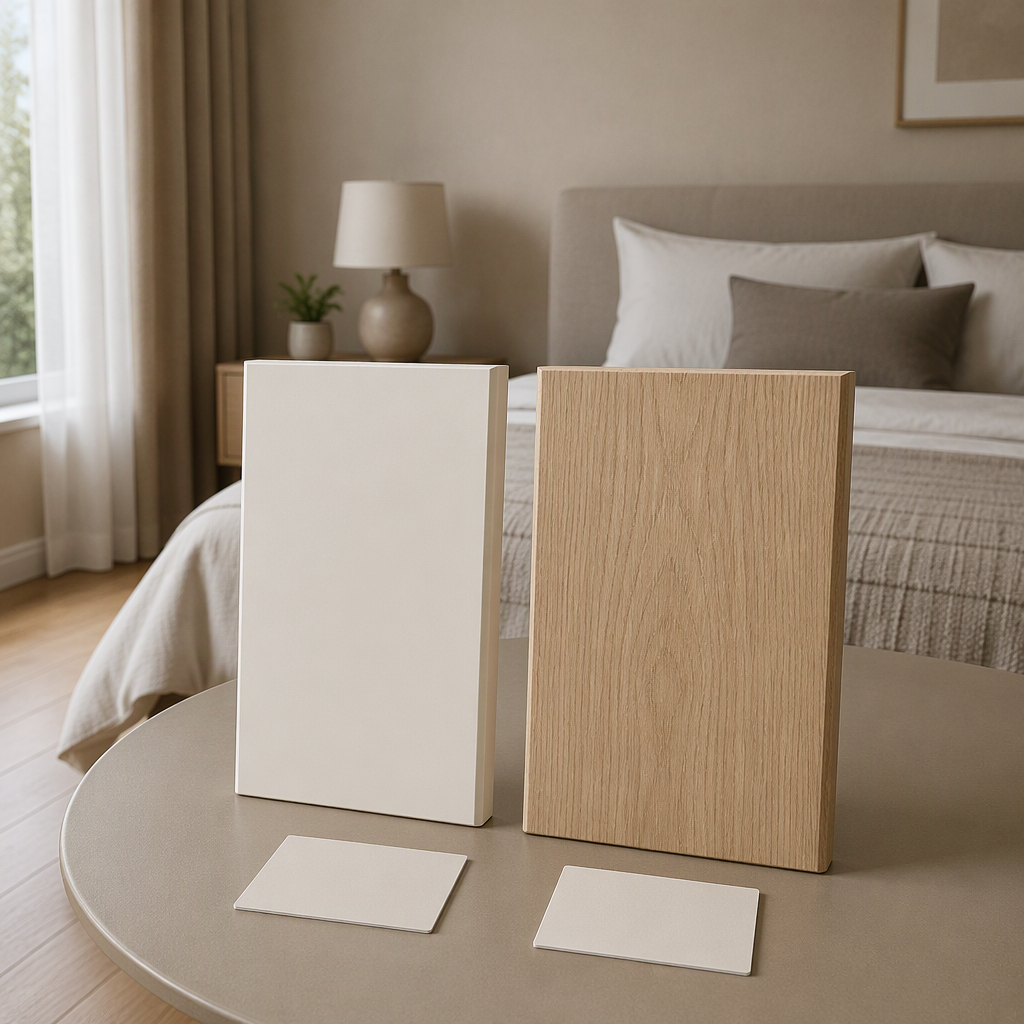
Best suited to projects where designers want a specific solid color, a smooth visual field, or coordinated trim and wall palettes.
Views: 0 Author: Site Editor Publish Time: 2026-11-20 Origin: Site
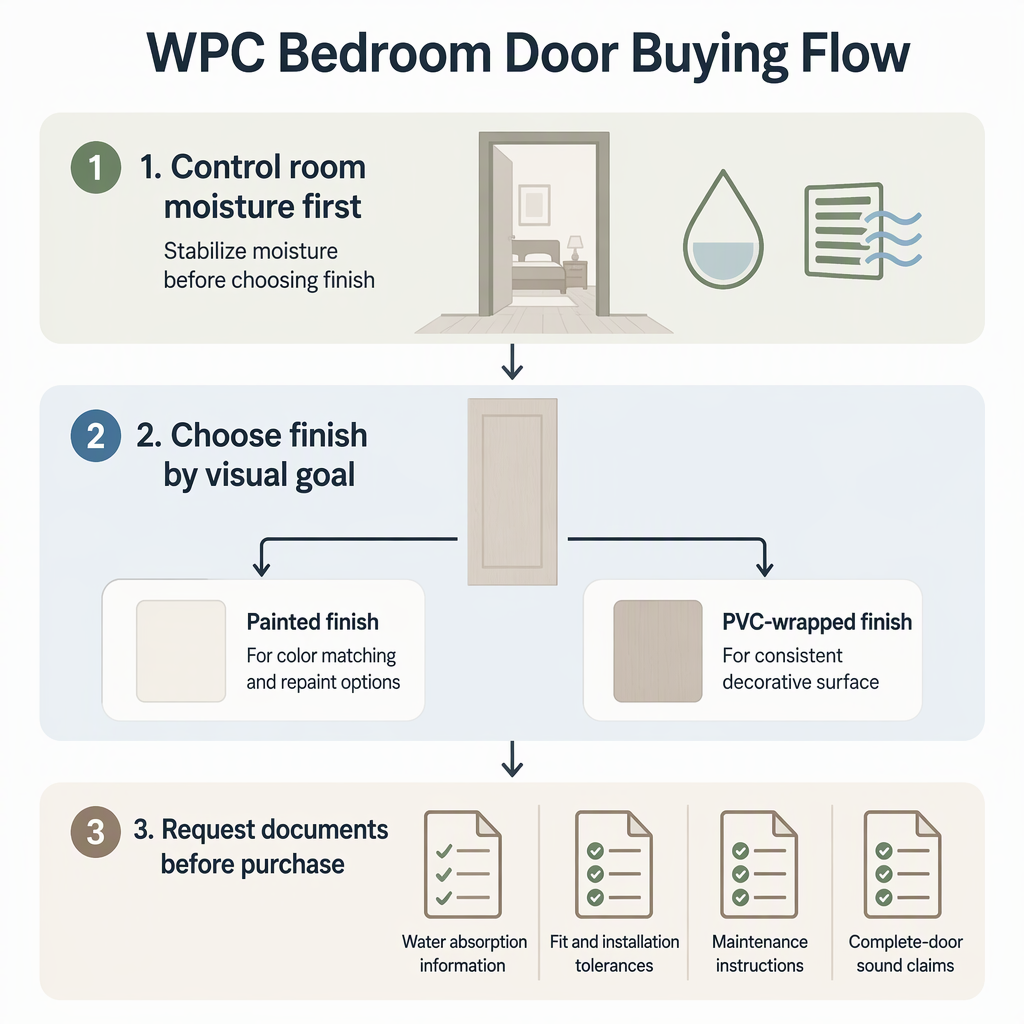
Choose painted WPC bedroom doors for color control and a furniture-like interior look; choose PVC-wrapped WPC bedroom doors for consistent wood-grain appearance across many openings. In humid, condensation-prone, or splash-risk bedrooms, control room moisture first, then request finish, water-absorption, fit, and complete-door sound documentation.
Best suited to projects where designers want a specific solid color, a smooth visual field, or coordinated trim and wall palettes.
Best suited to projects where buyers want repeatable wood-grain appearance and a ready-made surface look across multiple bedroom openings.
A painted WPC bedroom door fits buyers prioritizing color matching, repaintable design language, or a quieter visual surface over printed wood grain.
Apartment interiors, hotel-style bedrooms, and renovation projects where the door should blend with painted walls, skirting, wardrobes, or neutral trim.
Request the paint system description, available colors, edge treatment, cleaning instructions, and repair procedure for scratches or chips. Do not assume one painted finish has the same care method as another.
Do not select a painted finish on appearance alone. For replacement work, confirm whether the quotation covers the leaf, frame, trims, hardware preparation, and on-site finishing.
A PVC-wrapped WPC bedroom door is usually the better shortlist item when the buyer wants a repeatable wood-grain look and fewer color-matching decisions across many rooms.
Multi-room residential projects, rental apartments, and distributor stock programs where the same wood-grain visual needs to repeat from door to door.
Request the wrap film description, edge and corner details, available patterns, surface-cleaning limits, and how the supplier handles local damage at exposed edges.
Do not treat “PVC-wrapped” as proof of performance. Still request the finish construction, substrate, relevant lamination information, and permitted installation environment.
For a damp bedroom, first solve leaks, seepage, ventilation, condensation, and humidity; EPA moisture-control guidance explains that moisture can come from leaks, seepage, showers, cooking, and condensation on cold surfaces.
A WPC bedroom door finish should not be treated as a repair for an active building-water problem. The same EPA guidance points to fixing leaks, improving ventilation, using dehumidification where needed, increasing air circulation, and applying climate-appropriate measures.
Before approving either finish, request documents tying each claim to the exact specimen, door part, finish, and purchased assembly.
For moisture-related material claims, ASTM D570-22 determines the relative rate of water absorption of plastics when immersed; ASTM notes possible effects on properties, dimensions, and appearance depend on exposure, shape, and material.
For sound claims, ASTM identifies ASTM E90-09 is a historical laboratory method for airborne sound transmission loss of building partitions and elements, including doors; the same page lists E90-23 as active.
| Claim in the quotation | Document to request | Buyer check |
|---|---|---|
| Moisture resistance | Water-absorption or dimensional-stability report for the relevant material or finished part | Match the specimen, exposure condition, unit, and test version to the door being ordered. |
| Bedroom sound privacy | Complete door-assembly sound report, not only a door-leaf statement | Check whether the tested assembly includes leaf, frame, seals, threshold or door bottom, and specimen size. |
| Old-frame replacement | Door-leaf machining drawing and hardware-preparation limits | Separate door-slab size, frame size, and wall opening size in millimeters before approving production. |
For an old bedroom frame, decide finish only after measuring the door leaf, existing frame, clear opening, swing path, hinge positions, and lock preparation separately.
Neither finish should be called easier to maintain until the supplier states the cleaning agents, abrasion limits, repair method, and edge-care rules for the exact door finish.
| Maintenance question | Painted WPC bedroom door | PVC-wrapped WPC bedroom door |
|---|---|---|
| Daily cleaning | Ask which cloths and cleaners suit the paint surface. | Ask which cleaners suit the film surface and printed pattern. |
| Scratch or dent response | Ask whether local touch-up is permitted and whether color matching is supplied. | Ask whether local repair is possible at scratches, edges, or corners. |
| Edge care | Check whether painted edges are factory finished and how site cuts are sealed. | Check how wrapped edges, corners, and grooves are protected from lifting or damage. |
| Renovation flexibility | Ask whether repainting is allowed and what surface preparation is required. | Ask whether film replacement or panel replacement is supported. |
A finish choice alone does not prove corridor-noise reduction; laboratory sound ratings for doors depend on the tested building element or assembly, and ASTM cautions that laboratory ratings do not directly equal sound isolation in buildings because field flanking paths exist.
For bedroom privacy, ask for a complete-door assembly report and check the frame, seals, threshold or door-bottom condition, lockset openings, and installation gap. A smooth painted surface or wood-grain wrap is not enough evidence for acoustic performance.
ASTM’s E90 page covers laboratory measurement of airborne sound transmission loss of building partitions and elements, including doors, but it also distinguishes laboratory ratings from actual building isolation where sound can travel around the tested element.
Use painted for design-led color control, use PVC-wrapped for repeatable wood-grain appearance, and require the same evidence discipline for moisture, fit, maintenance, and sound claims.
| Buyer situation | Better shortlist | Reason to verify before purchase |
|---|---|---|
| Designer-led apartment or villa bedroom | Painted WPC bedroom door | Confirm color sample, gloss level, edge finish, and touch-up process. |
| Large project needing consistent wood-grain doors | PVC-wrapped WPC door | Confirm pattern code, batch consistency, edge wrapping, and cleaning limits. |
| Room with condensation or splash risk nearby | Either, after moisture control | Fix leaks, seepage, ventilation, condensation, and humidity sources before relying on any finish choice. |
| Old-frame replacement | Either, after fit confirmation | Confirm leaf size, frame size, opening size, hinge positions, lock preparation, and trimming rules in millimeters. |
| Bedroom privacy concern | Neither finish alone | Request complete assembly sound evidence because laboratory door tests and field sound isolation are not the same thing. |
The practical decision rule is simple: painted WPC bedroom doors are mainly a design-control choice, while PVC-wrapped WPC bedroom doors are mainly a repeatable wood-grain choice.
For importers, contractors, designers, and homeowners, do not let the finish carry unproven claims. Control room moisture, measure the door and frame, request finish-care instructions, and require documents matching the purchased material, leaf, or complete assembly.
These questions help buyers avoid overclaiming finish differences and focus on measurable ordering details.
They are better only when the project values color control, a smooth painted look, or coordination with painted interiors. If the project values repeatable wood-grain appearance, PVC-wrapped doors may be the stronger shortlist item.
Do not treat a wrapped finish as a cure for leaks, seepage, or persistent condensation. Moisture sources should be fixed through leak repair, ventilation, dehumidification, air circulation, and climate-appropriate control measures.
Request a report that identifies the specimen, exposure condition, test method, and result. ASTM D570-22 concerns water absorption of plastics when immersed, but it does not by itself prove the performance of a finished bedroom door assembly.
A finish alone is not sound-privacy evidence. Ask for complete assembly data because laboratory airborne sound transmission testing for doors does not directly equal field sound isolation in a building.
Measure the door leaf, frame, and wall opening separately in millimeters. Also record thickness, swing direction, hinge positions, latch height, privacy-lock requirement, and whether the supplier is quoting a leaf only or a full set.
Ask the supplier for the exact repair method. Painted surfaces may require color-matched touch-up rules, while wrapped surfaces may require edge, corner, or film-repair guidance. Do not assume either is repairable without written instructions.
Ask for certificates or test reports that identify the exact product, tested component, method edition, specimen size, result, and issuing body. Do not rely on a general certificate label unless it matches the door finish and configuration being ordered.