Views: 0 Author: Site Editor Publish Time: 2026-01-26 Origin: Site
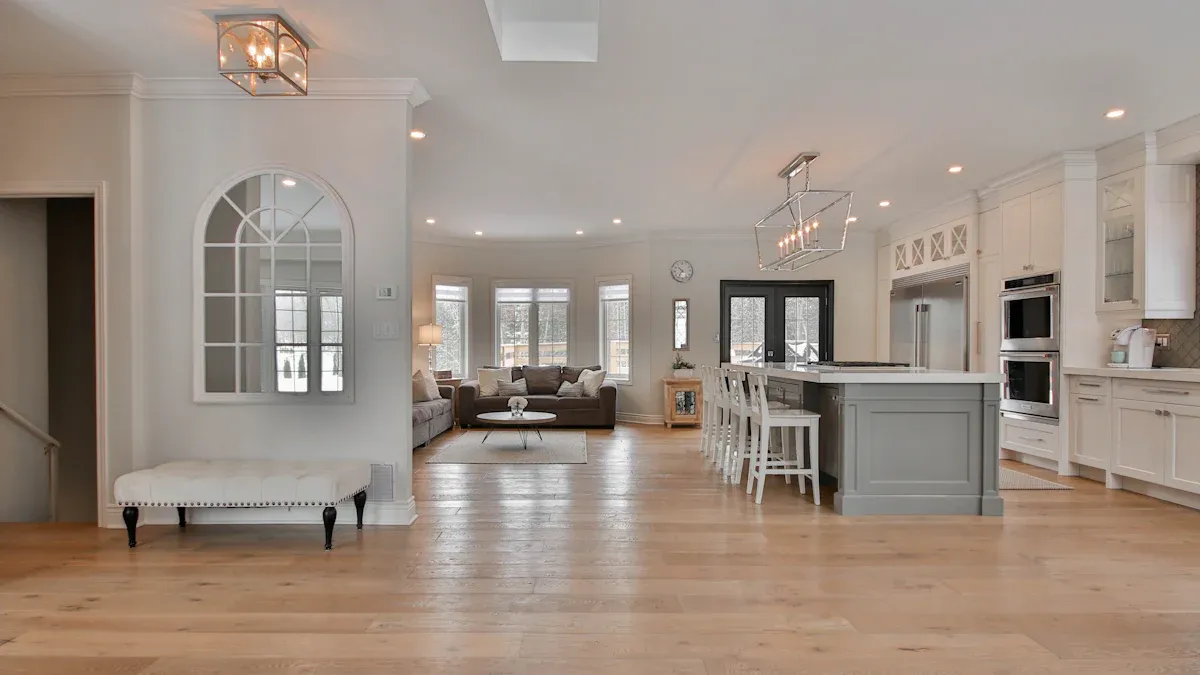
If you want the best lvp for high-traffic spaces, SPC flooring stands out as the most durable and stable choice. You get excellent resistance to dents and impact damage because SPC uses a rigid, dense core. Many commercial spaces choose SPC for this reason. WPC offers more comfort and warmth underfoot, so it feels softer when you stand for long periods. WPC also absorbs sound better, which helps reduce noise. When you compare WPC vs SPC, consider what matters most: durability, comfort, noise control, and cost.
Flooring Type | Durability | Rigidity | Water Resistance | Comfort | Market Growth |
|---|---|---|---|---|---|
SPC | High | Rigid | Excellent | Less | Fast |
WPC | Moderate | Softer | Good | More | Steady |
SPC flooring is the best choice for high-traffic areas due to its exceptional durability and resistance to dents and scratches.
WPC flooring offers more comfort and warmth underfoot, making it ideal for spaces where you stand for long periods.
Both flooring types are waterproof, but SPC flooring performs better in environments with fluctuating moisture and temperature.
Consider the specific needs of each room: choose SPC for busy areas like kitchens and WPC for cozy spaces like bedrooms.
Regular maintenance is easy for both types; simply sweep and mop to keep your floors looking new.
When you compare wpc vs spc, you notice big differences in their cores. WPC flooring uses a wpc core made from wood plastic composite, which combines wood fibers and PVC. This gives you a softer, more flexible surface. SPC flooring features an spc core made from stone plastic composite, blending limestone powder and PVC. The spc core feels much denser and more rigid. You get a surface that resists dents and heavy impacts.
Feature | WPC Flooring | SPC Flooring |
|---|---|---|
Core Composition | Wood fibers combined with PVC (wpc core) | Limestone powder and PVC (spc core) |
Durability | Good, but less rigid | Extremely rigid and stable |
Water Resistance | Good, but core may expand | Nearly impenetrable barrier against water |
Comfort Underfoot | More flexible and comfortable | Less comfortable, more rigid |
Sound Insulation | Absorbs sound waves, reduces noise | Less effective at sound absorption |
You see that the spc core makes spc flooring ideal for high traffic areas. The wpc core gives wpc flooring a softer feel, which works well in homes.
Thickness and rigidity affect how lvt performs in busy spaces. SPC flooring usually has a thinner profile but a much more rigid spc core. This rigidity helps prevent dents from heavy furniture or equipment. WPC flooring has a thicker, softer wpc core, which feels comfortable but may not handle heavy wear as well.
SPC flooring offers superior durability. You will notice fewer dents and scratches over time compared to other luxury vinyl plank options.
SPC flooring has a stone plastic composite core that provides exceptional rigidity and stability.
WPC flooring has a wood plastic composite core that absorbs impact, making it softer underfoot.
Flooring Type | Thickness | Rigidity | Suitability for High Traffic Areas |
|---|---|---|---|
SPC | Higher | More rigid | Ideal for high-traffic environments |
WPC | Lower | Less rigid | May not withstand heavy wear as effectively |
Both wpc and spc flooring offer waterproof protection. You can install luxury vinyl tile or luxury vinyl plank in kitchens, bathrooms, or basements without worrying about water damage. The spc core is impervious to changes in moisture and temperature. This makes spc flooring a top choice for commercial spaces and areas with fluctuating conditions. WPC flooring also resists water, but its wpc core may expand slightly if exposed to extreme moisture.
SPC flooring is designed for high traffic areas and resists extreme temperature changes.
Both wpc and spc flooring are completely waterproof, with water resistance applied to the top and bottom of the boards.
SPC flooring is impervious to changes in moisture and temperature, making it a superior choice for environments with fluctuating conditions.
You should consider these differences when choosing between wpc vs spc for your space. The spc core gives you better performance in tough environments, while the wpc core offers more comfort for everyday living.
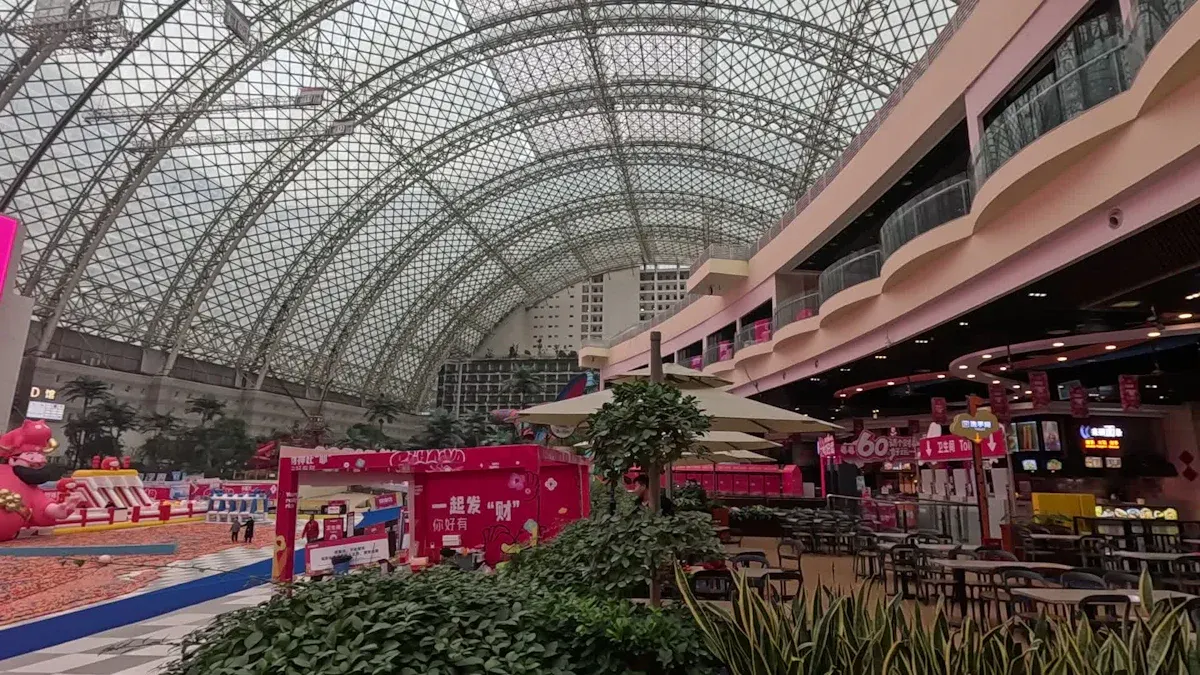
When you choose lvt for high-traffic spaces, you want a surface that stands up to daily wear. Both wpc and spc flooring offer a protective wear layer, but their cores make a big difference in how well they resist dents and scratches. The spc core gives spc flooring a dense, rigid structure. You notice fewer dents from heavy furniture or rolling carts. This makes spc a popular choice for commercial settings and busy homes.
The wpc core in wpc flooring feels softer underfoot. It absorbs some impact, which helps prevent minor dents. However, it does not match the hardness of spc. You may see more scratches and marks in areas with constant foot traffic or heavy use. Even with a scratch-resistant layer, neither wpc nor spc is completely scratch-proof. Over time, you might notice fading or loss of shine, especially if sunlight hits the floor often.
Tip: Place mats at entrances and use furniture pads to reduce scratches and dents on your lvp floors.
Here are some common issues you may encounter with both types of flooring in high-traffic areas:
Susceptibility to scratches and dents, especially in busy spaces
Fading over time due to sunlight exposure, even with UV protection
Wear layer resists scratches but does not make the floor scratch-proof
Once the floor loses its luster, you cannot restore it
Feature | WPC Flooring (wpc core) | SPC Flooring (spc core) |
|---|---|---|
Dent Resistance | Moderate | High |
Scratch Resistance | Good, but not scratch-proof | Excellent, but not scratch-proof |
Fading | UV coating helps prevent fading | Susceptible to color changes |
You need flooring that stays stable when people, carts, or wheelchairs move across it all day. The spc core in spc flooring provides outstanding dimensional stability. You see this in places like hospitals, schools, and retail stores. For example, a pediatric hospital in Germany installed spc flooring to handle the constant movement of wheelchairs and beds. The rigid spc core resists bending and warping, even under heavy rolling loads.
Wpc flooring, with its wpc core, offers flexibility and comfort. It absorbs impacts well, which makes it a good choice for homes or offices where you want a softer feel. However, it may not perform as well in extremely busy environments. You might notice more wear in spots where people walk or roll carts often.
SPC flooring stands out for its exceptional hardness and stability. You get reliable long-term performance in high-traffic spaces.
WPC flooring works best in indoor areas where comfort and sound insulation matter more than maximum durability.
When you compare luxury vinyl tile options, you see that spc flooring delivers better performance for high-traffic environments. The spc core keeps the floor stable and resists damage from heavy use. The wpc core in wpc flooring gives you comfort but may not last as long in busy settings.
Note: If your space gets a lot of sunlight, wpc flooring may hold its color better over time. SPC flooring can fade if exposed to direct sunlight for long periods.
WPC flooring has a UV coating that protects against fading from sunlight exposure.
SPC flooring lacks fade resistance, making it susceptible to color changes when exposed to sunlight.
You should weigh these factors when choosing between wpc and spc lvp. Think about the type of traffic your space gets and how much durability you need for long-term performance.
When you walk on lvt, you notice the difference in comfort underfoot. Wpc flooring gives you a softer surface because of its wpc core. You feel less strain on your feet, especially if you stand for long periods. The wpc core acts like a cushion, making each step gentle. You also get more warmth from wpc flooring. The material does not feel cold, even in winter. This makes wpc a popular choice for bedrooms, living rooms, and spaces where you want a cozy atmosphere.
Spc flooring feels firmer because of its spc core. The dense structure supports heavy loads, but you may notice less comfort underfoot. The spc core does not absorb impact as well as the wpc core. If you install spc flooring in a busy hallway or kitchen, you get durability, but the surface feels harder. You might prefer spc flooring in areas where toughness matters more than warmth.
Feature | WPC Flooring (wpc core) | SPC Flooring (spc core) |
|---|---|---|
Comfort Underfoot | High | Moderate |
Warmth | Good | Less |
Best Use | Living spaces | High-traffic zones |
Tip: If you want maximum comfort underfoot, choose wpc flooring for spaces where you spend a lot of time standing.
Noise control matters in busy homes and commercial spaces. Wpc flooring stands out for its sound absorption. The wpc core softens footsteps and reduces echoes. You hear less noise when people walk or move furniture. Acoustic testing shows that wpc can dampen noise by 20-25 dB. This makes wpc flooring a smart choice for apartments, offices, and classrooms.
Spc flooring uses a spc core that is firmer and denser. You get less sound absorption compared to wpc. The spc core does not block noise as well, so footsteps and movement sound louder. If you install spc flooring in a busy store or hallway, you may notice more noise. Some brands add extra underlayment to improve sound control, but wpc flooring still performs better in this area.
Wpc flooring has a softer core, making it quieter underfoot.
Spc flooring is firmer, so it absorbs less sound.
Wpc flooring can dampen noise more effectively in busy spaces.
If you want a quiet environment, wpc flooring offers better performance for sound absorption. You get a peaceful space with less noise from daily activity.
You want a floor that stays clean with little effort, especially in high-traffic areas. Both wpc and spc flooring offer low-maintenance solutions. You can sweep or vacuum daily to remove dust and debris. A damp mop with a mild cleaner keeps the surface fresh. You should avoid abrasive cleaning tools because they can scratch the wear layer. Furniture pads help prevent dents and scratches, so check and rearrange them regularly.
Sweep or vacuum to remove dirt and grit.
Use a damp mop and mild cleaner for deeper cleaning.
Avoid harsh chemicals and abrasive pads.
Check furniture pads to protect the surface.
You will find that wpc and spc flooring do not require waxing or polishing. The protective layer keeps the floor looking new. You save time and money on upkeep compared to other types of flooring.
You may worry about spills and stains in busy spaces. Both wpc and spc flooring provide strong water resistance and waterproof protection. You do not need to stress over coffee, wine, or pet accidents. The surface resists common household stains and does not swell or warp from water. You can wipe up spills quickly without leaving marks.
An excellent spc flooring uses advanced UV coating. You can easily clean wine stains, soil, oil, or other spots. The surface stays bright and smooth after cleaning.
You get peace of mind with wpc and spc flooring. The click-lock system makes installation easy, and the water resistance keeps your floor safe from damage. You can trust these floors to handle everyday messes in kitchens, entryways, and commercial spaces.
When you compare the upfront price of wpc and spc flooring, you notice some important differences. Material costs for both types range from $2.00 to $7.00 per square foot. Thicker planks usually cost more. Installation costs average around $2.75 per square foot, but you might pay more in urban areas. You also need to consider subfloor preparation, old flooring removal, and shipping fees. These extra expenses can add up, especially if your space needs a lot of work before installation.
Expense Type | Low-End ($/sq.ft) | High-End ($/sq.ft) | Average ($/sq.ft) | Key Considerations |
|---|---|---|---|---|
Material Cost | 2.00 | 7.00 | 4.50 | Thicker planks cost more |
Installation Cost | 1.50 | 4.00 | 2.75 | Urban areas have higher rates |
Subfloor Prep | 0.50 | 2.00 | 1.25 | Essential for uneven floors |
Old Flooring Removal | 0.50 | 1.50 | 1.00 | Depends on material type |
Shipping Fees | 0.10 | 0.50 | 0.30 | Bulk orders reduce costs |
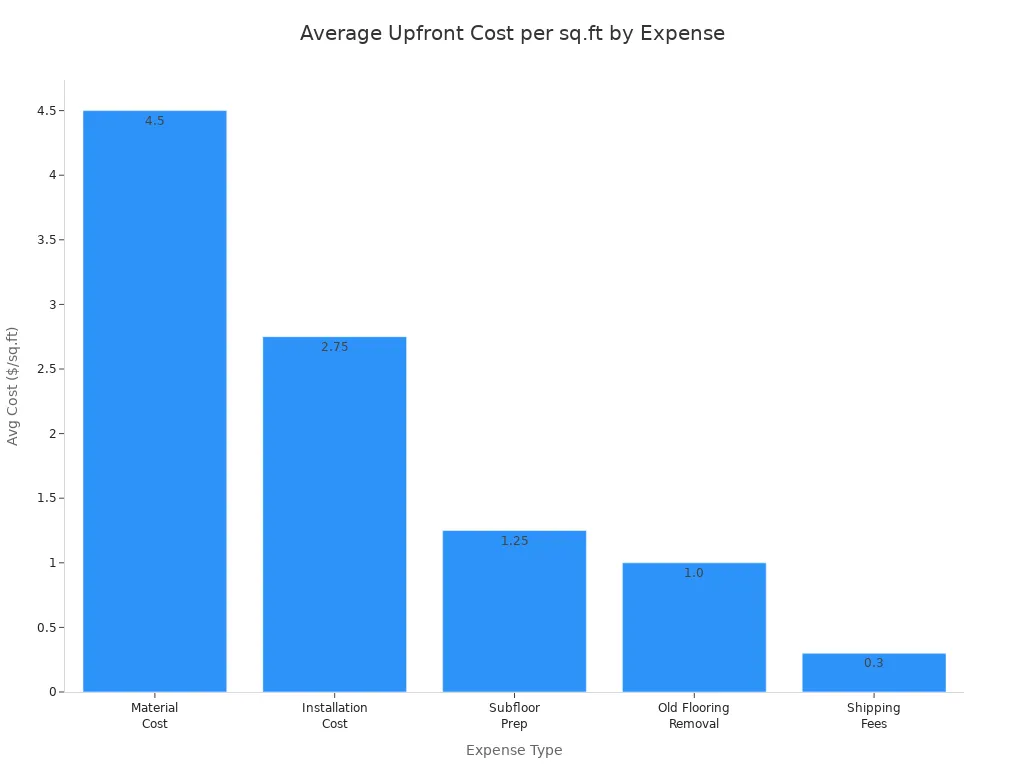
You should always ask your supplier for a full estimate. Prices can change based on your region and the brand you choose.
You want flooring that gives you the best long-term performance. spc flooring lasts 20 to 30 years, while wpc flooring usually lasts 10 to 15 years. Maintenance costs for spc are lower, averaging about $0.05 per square foot each year. wpc flooring costs more to maintain, often $0.15 or more per square foot per year. This difference matters if you have a large area or expect heavy use.
Flooring Type | Lifespan (Years) | Maintenance Cost per Square Foot per Year |
|---|---|---|
SPC | 20-30 | $0.05 |
WPC | 10-15 | $0.15 or more |
spc flooring works well in high-traffic areas like offices and stores. It resists water, dents, and scratches, so you spend less on repairs. wpc flooring feels softer and warmer, but it may show wear faster in busy spaces. Both types offer strong water resistance, which helps protect your investment.
Tip: Look for flooring with a lifetime structural warranty and finish wear-through coverage. Many brands offer these warranties if you install and maintain the floor properly.
You should weigh the upfront price against the long-term value. spc flooring often costs less to maintain and lasts longer, making it a smart choice for high-traffic areas.
When you compare wpc vs spc for high-traffic spaces, you want to see the main differences at a glance. The table below highlights how each flooring type performs in the areas that matter most.
Feature | SPC Flooring | WPC Flooring |
|---|---|---|
Core Material | Stone powder + PVC (rigid, dense) | Wood flour + PVC (soft, cushioned) |
Durability | Maximum durability for heavy use | Good durability, softer feel |
Comfort | Firm surface, less comfortable | Softer and warmer underfoot |
Noise | May require acoustic underlayment | Quieter performance, absorbs sound |
Water Resistance | Fully waterproof | Waterproof with slight flexibility |
Maintenance | Regular sweeping and damp mopping | Similar maintenance needs |
Cost | $2–$7 per sq. ft. (material only) | $4–$12 per sq. ft. (material only) |
Best For | High-traffic, sunny, or wet areas | Cozy, quiet spaces like bedrooms |
You can also look at the main advantages and disadvantages of each option:
SPC Flooring
Advantage: Exceptional dent resistance makes it ideal for high-traffic spaces.
Handles heavy furniture and active households with ease.
More stable in heat and humidity.
Disadvantage: Feels firmer and cooler underfoot, which may not suit every room.
Advantage: Softer, more cushioned feel gives you extra comfort and warmth.
Absorbs sound, creating a quieter environment.
Disadvantage: Shows wear faster in busy areas and costs more for material.
Tip: If you want the toughest floor for busy entryways or kitchens, spc gives you the best durability. If you value comfort and quiet, wpc works better in bedrooms or living rooms.
When you weigh wpc vs spc, think about your priorities. Do you need a floor that stands up to constant use, or do you want a softer, quieter space? This quick comparison helps you choose the right flooring for your needs.
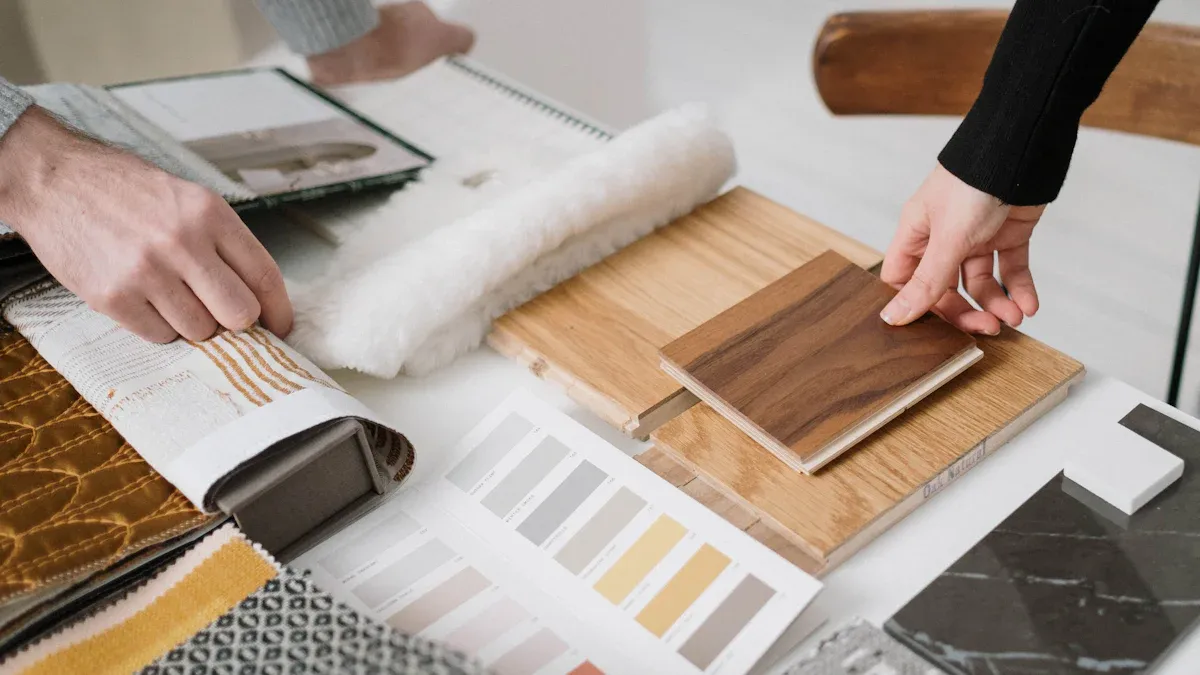
When you select flooring for high traffic areas, you need to weigh several important factors. SPC flooring stands out for its strength and stability. Industry experts highlight SPC as the best choice for busy environments like kitchens and retail spaces. Marjorie Benson, president of Friendly Floors, calls SPC a "home run" for anyone who wants tough, dent-resistant flooring. You may find SPC especially helpful if you want to install new floors without removing old ceramic or porcelain tiles.
WPC flooring offers greater comfort and sound absorption. You might prefer WPC in rooms where you spend a lot of time standing or relaxing. Experts suggest WPC works better in quieter spaces, such as bedrooms or living rooms. You should consider the type of traffic each room receives. SPC handles heavy use and rolling furniture, while WPC creates a softer, quieter atmosphere.
Use this table to compare decision factors for different rooms:
Factor | SPC Flooring | WPC Flooring |
|---|---|---|
Durability | Best for high traffic | Good for moderate use |
Comfort | Firm underfoot | Soft and warm |
Noise Control | May need underlayment | Absorbs sound well |
Suitable Room Types | Kitchens, entryways, retail | Bedrooms, offices, living rooms |
You can make installation easier by following a few simple steps. For SPC flooring, you need a clean, flat, and dry subfloor. This helps prevent loose planks and uneven surfaces. Hiring a professional installer with experience in high traffic settings gives you better results. You should plan carefully for rooms with heavy use.
WPC flooring has a thicker profile. You need to check door clearance and transitions between rooms. Careful planning helps you avoid problems during installation. You may want to use WPC in rooms where comfort matters most.
Tip: Always match the flooring type to the needs of each room. SPC works best in busy areas, while WPC suits rooms where you want warmth and quiet.
You can create a comfortable home by choosing the right flooring for each space. Think about how each room is used and select the option that fits your lifestyle.
You want flooring that stands up to busy spaces. SPC flooring is an excellent choice for high traffic areas because it resists dents and wear. WPC flooring feels softer and absorbs sound, but it is less ideal for heavy use. If you value durability, SPC is an excellent choice for kitchens, offices, and bathrooms. If comfort matters most, WPC works well in bedrooms or quiet rooms. You should think about your needs and ask a flooring professional for advice.
Flooring Type | Priorities | Recommendations |
|---|---|---|
SPC | Durability | Ideal for high-traffic, high-humidity, or hot zones |
WPC | Comfort | Best for low-traffic, cozy spaces |
WPC flooring uses a wood-plastic composite core, which feels softer and warmer. SPC flooring uses a stone-plastic composite core, which feels harder and more durable. You get more comfort with WPC and more strength with SPC.
Yes, you can install both types over many existing floors. Make sure the surface is clean, dry, and level. SPC works better over uneven surfaces because of its rigid core.
SPC flooring feels firmer and cooler than WPC. You can add an underlayment to improve comfort and warmth. Many people use rugs in busy areas for extra softness.
Sweep or vacuum daily to remove dirt. Use a damp mop with a mild cleaner for deeper cleaning. Avoid harsh chemicals and abrasive pads. Both floors resist stains and water, so you can clean up spills easily.


