Views: 0 Author: Site Editor Publish Time: 2026-08-25 Origin: Site
Commercial procurement always involves high stakes. Bulk ordering brings down unit costs. However, it multiplies your risks regarding material failure, project delays, or compliance headaches. Visual similarities in Wood Plastic Composite (WPC) products often hide deep structural deficits. You need a strict, evidence-based evaluation framework. This applies especially when purchasing wholesale WPC door frames for large-scale developments. Proper vetting ensures absolute durability. It guarantees trusted supplier reliability. It also creates seamless project alignment.
Not all WPC products share the same manufacturing standards. Formulations vary wildly across factories. Poor choices lead to heavy replacement costs down the line. We will break down exactly what you must look for during vendor evaluation. You will discover how to verify material composition and assess vendor capabilities. We also cover aligning hardware specs and securing proper packaging. Let us explore the essential checks every buyer must master.
Material Density Matters: High-density, virgin-polymer WPC is non-negotiable for load-bearing commercial applications.
Supplier Vetting: Always verify production capacity, quality control protocols, and realistic WPC frame MOQs before committing.
Technical Alignment: Ensure the frame profile, hardware compatibility, and surface treatments match exact architectural specifications.
Total Cost of Ownership: Factor in packaging standards, transit damage risks, and installation speed, not just the raw unit price.
Buyers must understand how to verify quality claims. You need strategies to avoid inferior formulations. Manufacturers often cut corners to lower their bids. Recognizing these shortcuts protects your investment.
A massive performance gap exists between virgin and recycled polymers. Recycled resins lower production costs significantly. However, they compromise overall structural integrity. Repeated melting degrades polymer chains. This degradation reduces screw-holding capacity. Weak screw retention causes heavy doors to sag over time. Commercial properties cannot afford such liabilities.
You need concrete evaluation metrics. Always request material safety data sheets (MSDS) from potential suppliers. Ask them to declare their exact wood-fiber to PVC ratio. A balanced ratio ensures optimal rigidity and flexibility. High-quality frames typically use virgin PVC to guarantee consistent mechanical properties.
Density serves as a primary indicator of structural strength. Standard acceptable density ranges for commercial doors fall between 0.85 and 1.05 g/cm³. You should request weight specifications for standard profile lengths. Compare these numbers across different manufacturers.
Lightweight frames pose a severe risk factor. Hollow-sounding profiles often indicate insufficient material usage. These thin walls become highly prone to warping under temperature fluctuations. Thermal expansion affects low-density WPC much faster. Always weigh physical samples upon arrival.
Suppliers frequently make bold water-resistance claims. You must rigorously verify claims of a true waterproof door jamb. WPC inherently resists moisture better than pure wood. Still, poor manufacturing leaves exposed wood fibers vulnerable. These fibers absorb ambient humidity and swell.
Ask for independent laboratory test reports. Focus specifically on water absorption rates. Look at the swell thickness data after 24-hour submersion tests. Premium products exhibit less than a 1% swelling rate. This verification prevents rot and mold in humid environments.
Material Testing Guidelines
Testing Metric | Acceptable Standard | Warning Signs |
|---|---|---|
Polymer Quality | 100% Virgin PVC | Brittle edges, inconsistent color |
Density Range | 0.85 - 1.05 g/cm³ | Hollow sound when tapped |
Water Absorption | < 1% after 24 hours | Visible swelling or splitting |
Screw Holding | Firm grip, no crumbling | Stripped threads during testing |
Evaluating the manufacturer requires looking past the product itself. You must assess their ability to deliver at scale. Consistency remains critical across large bulk orders.
A supplier might produce excellent samples. However, they could lack the machinery for massive orders. Verify their factory equipment inventory. Count their active extrusion lines. Determine their maximum monthly output limits. This prevents timeline bottlenecks during critical construction phases.
Take direct action early in the process. Request a live video tour of their facility. Alternatively, hire an agency for a third-party factory audit report. Visual confirmation of their operations builds lasting trust.
Minimum order quantities dictate your purchasing flexibility. Standard industry MOQs usually range from 200 to 500 sets for catalog profiles. Custom profiles often require higher commitments. The factory must justify the time spent setting up new molds.
Look out for vital trust signals. Be highly skeptical of suppliers offering an unusually low WPC frame MOQ on bespoke extrusions. This often indicates outsourced manufacturing. Fragmented supply chains destroy quality control. Deal directly with actual factories.
Clear defect definitions save massive headaches later. Define your acceptable defect rates clearly in the contract. A rate below 2% is standard for bulk construction materials.
Outline the supplier's replacement policy explicitly. Determine who covers shipping for transit-damaged units. Establish protocols for reporting warped frames. Get these quality assurance commitments in writing before transferring any deposits.
Standard catalog options rarely fit every architectural vision. You must bridge the gap between stock designs and specific project needs. Customization ensures perfect aesthetic integration.
Creating new extrusion molds involves precision engineering. The process starts by reviewing CAD drawings. The factory then cuts a steel die. Creating a custom WPC door frame requires intense collaboration. You must sign off on 3D printed samples first.
Detail the lead times clearly. Tooling a new mold usually takes 20 to 30 days. You must also budget for tooling costs. Launching an OEM door frame project requires upfront investment. Reliable factories often refund mold fees after order volumes reach a specific threshold.
Raw WPC needs protective and decorative layers. Compare your finishing options carefully. PVC film lamination offers excellent wood-grain realism. PU painting provides solid colors. Heat transfer printing embeds patterns directly onto the substrate.
Evaluate the adhesion quality rigorously. Finishes must not peel in high-traffic corridors. Humid environments demand superior glue grades. Request cross-hatch adhesion test results. Peeling laminates destroy the visual appeal of any commercial space instantly.
Real-world implementation brings unique challenges. You must consider contractor-side risks early. Beautiful materials fail if installation proves overly complex.
Commercial hardware demands sturdy anchoring. Ensure your frame design accommodates standard commercial hinges. Specialized on-site routing wastes expensive labor hours. The profiles should arrive ready for standard locksets.
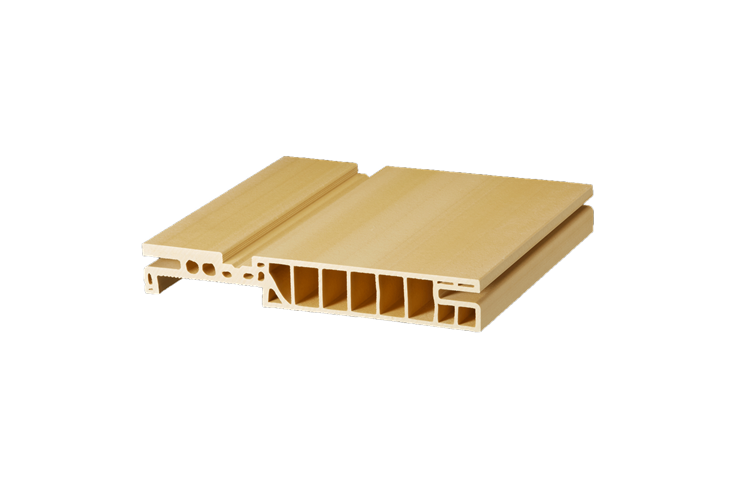
Verify internal structural reinforcements carefully. Standard hollow WPC cannot hold heavy commercial doors. Look for added material density at hinge zones. Some manufacturers insert Laminated Veneer Lumber (LVL) blocks at hinge points. This reinforcement prevents long-term door sag entirely.
Installation teams often follow outdated habits. Address the differences between installing WPC versus traditional wood. WPC requires different pilot hole techniques. Using wrong screws causes material splitting.
Take preventative action. Request installation manuals from the manufacturer. Ask for physical routing templates. Supply these documents to your on-site teams. Proper training prevents costly material waste during the final fit-out.
Installation Preparation Steps:
Verify rough opening dimensions against the finalized WPC profile specifications.
Locate the reinforced LVL zones before drilling any hinge pilot holes.
Select specialized threading screws designed specifically for composite materials.
Apply appropriate polyurethane foam sealants designed for rigid PVC substrates.
Evaluating bulk orders means looking beyond unit pricing. Moving materials safely across oceans requires strict planning. You must calculate every expense to understand true landed values.
Ocean freight presents severe physical hazards. Shipping containers reach extreme temperatures in transit. Improperly stacked WPC frames will deform under immense heat. Lack of edge protection leads to chipping.
Specify your preferred packing methods in the contract. Demand rigid wooden pallets for absolute base support. Require heavy-duty shrink wrapping to block ambient moisture. Insist on hard corner guards for every bundle. These steps eliminate structural deformation during long voyages.
The raw unit price only tells half the story. You must aggregate all associated expenditures. Include your initial tooling fees. Factor in the costs of sample shipping. Add ocean freight charges and destination customs duties. You must also account for expected wastage by ordering buffer stock.
Use a shortlisting logic framework. Balance the initial unit price against supplier reliability. Consider the warranty terms strongly. Factor in the expected material lifespan. Cheaper frames cost more if they require replacement after three years. Smart procurement prioritizes long-term stability.
Purchasing commercial door frames demands meticulous preparation. You must execute a precise purchasing decision framework. Start by verifying material composition thoroughly. Move next to strict supplier vetting. Ensure absolute customization alignment for your architecture. Finally, lock down your logistics and packaging planning.
Rigorous upfront checks prevent costly on-site failures. They eliminate frustrating project delays. Your attention to detail during the procurement phase guarantees smooth installation later. Never rely on visual inspections alone.
Your next step requires immediate action. Contact your shortlisted suppliers today. Recommend ordering a simple cut-sample first. Then, commission a full-size prototype. Perform rigorous hardware testing on this prototype. Only finalize your bulk commercial contract after the prototype passes every stress test.
A: Start by performing a screw-holding test. Drive standard hinges into the frame and test the pull-out resistance. Submerge a cut section in water for 24 hours to check for swelling. Finally, inspect the cross-section closely. Look for uniform density and check for any brittle or crumbling inner walls.
A: Standard catalog profiles usually require 15 to 25 days for mass production. If you require OEM mold creation, add an extra 20 to 30 days for tooling and sample approval. Always factor in transit times, which vary heavily based on your geographic location.
A: Yes, contractors can paint them on-site. However, WPC has low surface tension. You cannot use standard wood paints directly. The installation team must apply specialized PVC adhesion primers first. We highly recommend ordering them factory-finished to ensure lasting durability and perfect color matching.
A: WPC offers complete rust resistance, making it superior for humid or coastal environments. It is much lighter, ensuring faster and safer installation. While steel provides higher impact ratings for heavy industrial zones, WPC delivers better aesthetic warmth and sufficient durability for standard commercial corridors.