
Views: 0 Author: Site Editor Publish Time: 2026-09-02 Origin: Site


Sourcing architectural materials requires precise planning and secure supply chains. B2B buyers, contractors, and distributors constantly face a major logistical challenge. They must carefully balance strict project deadlines against the substantial financial commitments of bulk manufacturing.
Navigating factory production schedules often feels completely opaque to outside buyers. Many procurement teams risk severe delays when they misjudge minimum order thresholds for commercial builds. Furthermore, unusually fast delivery estimates often signal compromised quality control or unreliable outsourced manufacturing operations.
This article demystifies the true manufacturing timelines behind commercial extrusion schedules. We will clarify exact minimum order expectations and outline the hidden variables affecting your sourcing strategy. You will learn how to secure dependable production runs without sacrificing critical project deadlines.
Standard orders typically require lower minimums (e.g., 200–500 SQM) and move to production quickly, while custom profiles demand higher thresholds to justify tooling costs.
Total delivery timelines must account for three distinct phases: prototyping/tooling, mass extrusion, and international freight.
Securing reliable wholesale partners requires verifying internal quality assurance protocols, not just accepting the lowest initial quote.
Customizations like unique co-extrusion capping, proprietary colors, or specific fire-retardant additives directly extend both production schedules and upfront costs.
Understanding factory minimums begins with basic manufacturing economics. Volume dictates everything on the production floor.
Extrusion manufacturing inherently demands minimum volumes. Machines require hours of intensive setup. Operators must purge old resin from giant mixing hoppers. They blend fresh raw materials in massive batches. Running tiny quantities wastes enormous energy and raw material. Manufacturers lose money during machine idle time. Therefore, they impose minimum thresholds to keep extrusion lines running profitably.
For standard off-the-shelf molds, baseline expectations remain quite reasonable. Factories run popular profiles continuously. You can typically negotiate a standard WPC wall panel MOQ by the pallet. Sometimes you only need a fraction of a 20-foot shipping container. A common baseline sits around 200 to 500 square meters. Factories run standard factory colors weekly. This frequent rotation drastically reduces their setup waste.
Modifying dimensions immediately shifts the factory math. Introducing non-standard wood grain embossing requires new steel rollers. Requesting specific Pantone color matches demands highly specialized pigment blending. These bespoke changes elevate the minimum order requirement. Manufacturers must absorb the inherent setup inefficiencies. You must order sufficient volume to justify creating a true custom WPC panel. Custom runs routinely start at 1,000 square meters or more to offset these initial tooling costs.
Smart buyers use specific negotiation tactics to lower risk. You can request mixed color runs within a single shipping container. You can also combine mixed profiles to reach the required volume. This strategy helps you meet wholesale thresholds easily. It also prevents you from severely over-stocking a single untested SKU. Many proactive factories accept mixed orders willingly. You simply need to cover the minor color-change machinery fees.
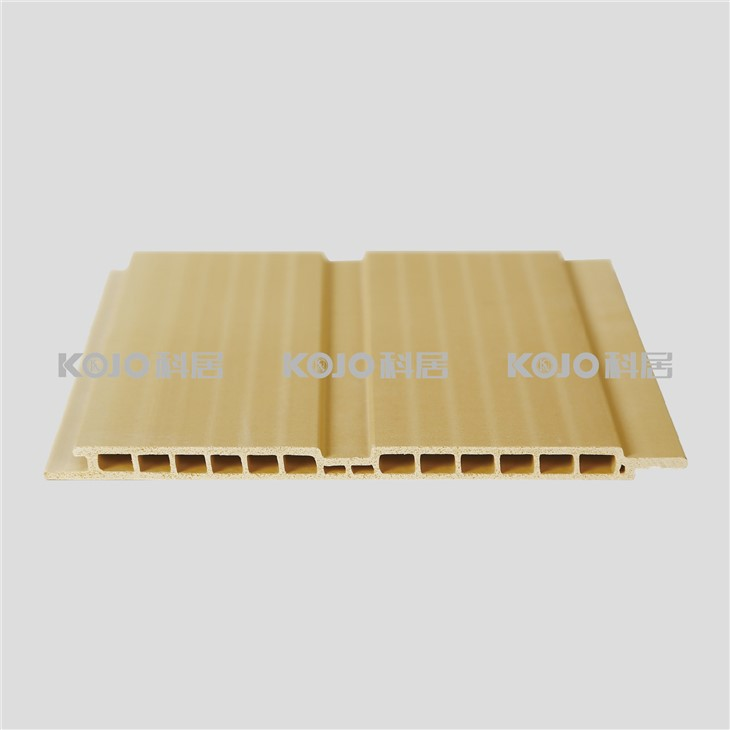
Predicting an accurate panel production lead time prevents job-site scheduling disasters. We break this complex manufacturing process down into four non-negotiable phases.
Creating custom profiles takes significant engineering time. Technicians must cut brand new extrusion molds from solid steel. Once the die is ready, the factory runs initial test batches. They check exact dimensional tolerances. Next, they express ship physical prototypes directly to your office. You must evaluate the sample carefully. Mass production pauses completely during this stage. The factory awaits your formal written approval before proceeding.
Quality extrusion starts with premium ingredients. Factories must source highly uniform wood fibers. They procure specific grades of HDPE or PVC resin. Specialized formulations demand strict raw material specifications. For instance, high-UV resistance requires specific stabilizing chemicals. Workers blend these raw components inside massive heated silos. Moisture removal remains critical here. Even minor dampness in the wood powder causes structural bubbling during extrusion.
This phase represents the core manufacturing activity. Massive machines melt and continuously extrude the composite material. Long cooling tanks progressively harden the hot profiles. Precision saws then cut them to your requested lengths. Surface treatments follow immediately. Operators pass the boards through heavy sanding or embossing machines. You cannot artificially rush this stage. Speeding up the water-cooling process causes severe panel warping later. Boards will bow on the job site if cooled too quickly.
Never underestimate the time needed for final checks. Dedicated quality assurance teams perform strict pre-shipment inspections. They verify color consistency against your approved master sample. They measure final dimensional tolerances. Finally, workers prepare the goods for international export. Proper palletizing prevents severe transit damage. They add robust corner protectors and secure the bundles firmly. Strong crating survives rough ocean swells.
Sourcing bespoke OEM wall cladding introduces several unique production variables. Advanced product features directly alter the factory timelines.
Modern commercial cladding often utilizes co-extrusion technology. This provides a 360-degree protective polymer shield around the core. This advanced capping requires complex machinery calibration. Multiple extruders must synchronize their material flows perfectly. Getting this synchronization right adds several days to the initial setup time. Traditional uncapped panels process much faster. However, uncapped boards lack the premium stain and fade resistance required for high-end exterior projects.
Commercial building codes demand strict safety compliance. Formulating Class A or Class B fire-rated panels takes deep chemical expertise. Heavy-duty commercial grades require precise impact modifiers. Factories must blend these chemicals flawlessly. Once extruded, these specialty panels often undergo mandatory third-party lab testing. Laboratories test flame spread and smoke development. Lab verification inherently delays the final shipping release. However, it guarantees your panels pass strict municipal building inspections.
Standard profile cuts fit perfectly into standard shipping containers. Requesting non-standard panel lengths optimizes your job-site installation. For example, 3-meter or 4-meter cuts eliminate unsightly vertical seams on tall walls. Yet, unusual lengths present severe logistical challenges. They require custom wooden crating solutions. They also completely alter standard container loading plans. Logistical adjustments and custom crate building add several days to the preparation phase.
Moving massive loads of wholesale WPC wall panels across the globe requires flawless coordination. Manufacturing represents only half the battle.
International commercial terms dictate who controls the freight timeline. Under FOB (Free on Board) terms, the factory simply delivers goods to their local port. You manage the complex ocean transit. Under DDP (Delivered Duty Paid) terms, the supplier manages everything directly to your warehouse door. Knowing your specific incoterms prevents unexpected delays. It clarifies exactly who handles customs clearance disputes.
Set highly realistic expectations for international shipping routes. Transpacific or Asia-to-Europe ocean routes typically span 25 to 45 days. You must account for severe port congestion. Crowded destination ports can add weeks to this estimate. Peak shipping seasons routinely cause vessel space shortages. Carriers often roll containers to later ships during these busy periods. Always anticipate transit volatility.
Missing paperwork guarantees immediate border delays. You need a flawless commercial invoice. You must provide a highly accurate packing list. A valid certificate of origin often lowers your import duties. If the factory uses solid wood pallets, you need official fumigation certificates. Port authorities strictly enforce ISPM-15 wood packaging rules. Ensure your customs broker receives these digital documents long before the vessel arrives.
Factory completion estimates represent optimistic best-case scenarios. Experienced buyers always add a 15% time buffer to all production schedules. This buffer successfully absorbs unexpected force majeure events. It covers routine vessel rolling at crowded export ports. More importantly, it allows sufficient time for factory corrections. If a pre-shipment inspection reveals color defects, the factory needs days to replace the rejected batch.
Finding a trustworthy supplier greatly mitigates commercial risk. Use this practical verification framework to evaluate potential manufacturing partners objectively.
Determine immediately if you are communicating with a true manufacturer. Many online suppliers act strictly as trading companies. Request live video audits of their extrusion lines. Ask for official ISO 9001 and ISO 14001 certificates. Count their active extrusion machines during the video call. Thirty machines indicate strong capacity. Five machines indicate a small operation prone to delays.
Never release the final balance payment blindly. Link your final wire transfer to a passing third-party Quality Control (QC) inspection. Base this physical inspection on globally recognized AQL (Acceptable Quality Limit) standards. A typical standard uses AQL 2.5 for major defects. If the goods fail the inspection, the factory must rework the order at their own expense.
Structure your initial purchase orders carefully. Include highly transparent and legally enforceable terms. Address delayed lead times specifically. Define unacceptable defect rates clearly. Good factories willingly accept reasonable penalty clauses. For example, specify a 1% cost deduction for every week of delayed shipment. This keeps the factory financially motivated to hit your deadline.
Initiate the factory sourcing process methodically.
Start by requesting physical material samples from three different suppliers.
Test these samples for scratch resistance and color fastness.
Share your specific architectural CAD drawings for a precise mold assessment.
Confirm the exact minimum order limits in writing.
Finalize the tooling fees before wiring any initial deposits.
Verification Step |
Primary Objective |
Document or Action Required |
|---|---|---|
Capacity Check |
Confirm true manufacturing scale |
Live video tour & Machine count |
Quality Assurance |
Verify internal testing protocols |
ISO 9001 Certificate & Lab reports |
Accountability |
Ensure financial protection |
Third-party AQL Inspection clause |
Logistics Readiness |
Prevent customs delays |
ISPM-15 Fumigation records |
Customization inherently increases both your minimum volume requirements and your delivery times. You cannot cheat the physics of extrusion manufacturing. Moving from standard profiles to bespoke designs requires new tooling, exact color blending, and slower initial machine setups.
Partnering with a highly transparent manufacturer remains your best defense against project delays. Reliable factories provide realistic, staged production timelines. They communicate machine delays openly. This transparency drastically reduces your long-term commercial risk. It allows you to align your job-site installation crews perfectly with ocean freight arrivals.
Define your specific project scope clearly today. Decide between fast-shipping standard profiles or high-impact custom extrusions early in the planning phase. Then, contact an experienced technical sales team for a precise tooling cost and production schedule estimate.
A: Yes, it inherently pauses the schedule. Sample approval serves as a mandatory prerequisite for custom runs. Engineers must cut the mold, extrude a short batch, and express ship it to you. Mass production halts entirely until you provide official written sign-off on the physical piece.
A: Factories frequently allow color mixing, but internal policies vary. Changing colors requires completely purging the extrusion machinery. This wastes material and valuable machine time. Manufacturers typically allow mixed colors within a single shipping container if you pay a nominal changeover fee.
A: The factory stores and maintains your custom steel mold for future runs. Typically, you retain the intellectual property ownership of this specific profile. Because the physical tooling already exists, your subsequent orders bypass the pre-production phase entirely. This significantly shortens future lead times.
A: Yes, many reliable manufacturers offer standard tooling rebates. Once your cumulative order volume reaches a specific threshold—often measured in total square meters or container loads—the factory refunds the initial mold fee. You should negotiate these exact rebate terms before issuing your first purchase order.


