Views: 0 Author: Site Editor Publish Time: 2026-11-05 Origin: Site
Wood Plastic Composite (WPC) doors represent a significant engineering evolution in modern interior door solutions. Traditional timber often struggles in damp environments. It naturally absorbs ambient moisture, swells, and eventually degrades. This creates a constant cycle of costly repairs, aesthetic degradation, and frustrating replacements. Homeowners, interior designers, and contractors increasingly need performance-grade materials to overcome these historical challenges. A WPC Waterproof Door solves this fundamental problem directly. It blends the timeless aesthetic appeal of natural wood with the uncompromising resilience of modern polymers. This article provides a highly technical, objective evaluation of WPC door performance. You will learn exactly how material composition drives long-term durability and practical application. We will explore critical quality metrics, daily installation realities, and ongoing maintenance profiles. By the end, you will have a clear, actionable framework to determine if these advanced composite doors fit your next architectural project.
Core Value: Superior moisture resistance compared to solid wood or MDF.
Longevity: Resistant to decay, warping, and termite damage.
Performance: High dimensional stability in humid environments (bathrooms, kitchens, basements).
Sustainability: Typically utilizes recycled wood fiber and thermoplastic resins.
Decision Framework: Evaluation criteria should prioritize environmental stability, installation ease, and maintenance cycles.
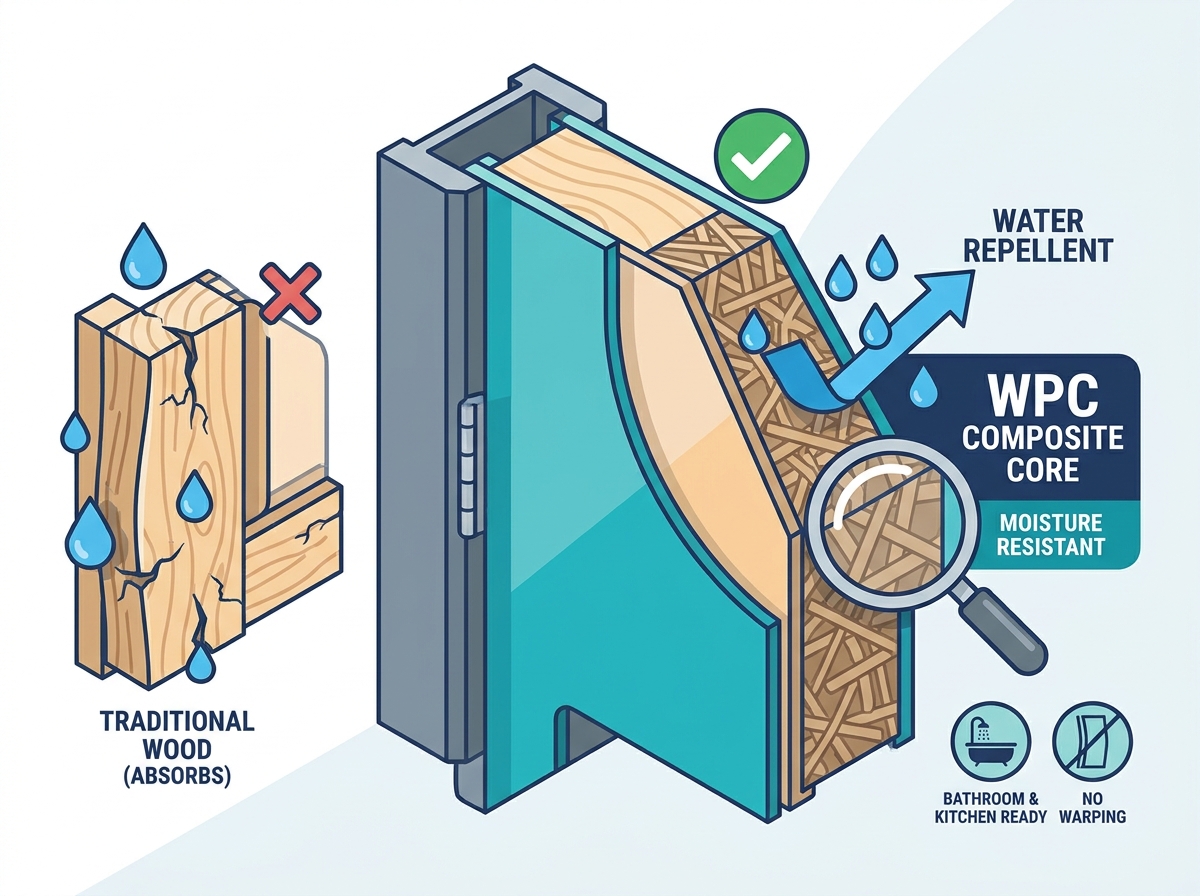
Manufacturers create WPC by meticulously blending fine wood fibers and thermoplastic polymers. They typically use Polyvinyl Chloride (PVC) or Polyethylene (PE) as the primary binding polymer. They also add specialized binding agents, foaming agents, and UV stabilizers into the extrusion process. This complex chemical profile creates a highly durable matrix. The wood fibers provide necessary tensile strength and structural rigidity. Simultaneously, the polymers encapsulate these wood fibers completely. This encapsulation prevents moisture penetration at a microscopic level, creating an impenetrable barrier.
You must understand the critical distinction between "waterproof" and "water-resistant." Many traditional wooden doors feature water-resistant surface treatments, such as varnishes or polyurethane coatings. These topical coatings eventually degrade, crack, or scratch from daily use. When they fail, moisture rapidly enters the vulnerable core. A true WPC Waterproof Door features a completely non-porous surface and an impervious composite core. It simply cannot absorb water, even if the exterior surface sustains a deep physical scratch.
This unique composition ensures exceptional structural integrity throughout the product's lifespan. High-humidity zones often cause solid wood or medium-density fiberboard (MDF) to swell drastically. The organic fibers expand as they take in moisture from the air. WPC resists this swelling effect entirely. It maintains its exact factory dimensions regardless of environmental moisture levels, preventing doors from binding or scraping against the floor over time.
Not all composite doors offer the exact same performance baseline. You must evaluate them across several critical dimensions to ensure you procure a premium product. Density and weight serve as primary quality indicators in the industry. Higher density directly correlates to substantially better screw-holding power. Heavy, dense doors support hinges and locks securely over decades of continuous operation. Lighter, hollow-core composites often suffer from hardware sagging over time, leading to operational misalignment.
You should also carefully examine the available surface finishing options. Manufacturers offer several distinct choices based on aesthetic needs. Factory-applied UV coatings provide excellent scratch resistance and a modern, sleek appearance. PVC film laminates mimic natural wood grains beautifully, offering the visual warmth of timber without the biological flaws. Paintable finishes allow for custom interior color matching. Each finish type directly affects both physical durability and interior design flexibility.
Safety standards require careful, documented verification. Always check for independent, third-party certifications before purchasing. Look specifically for ultra-low formaldehyde emission levels to ensure healthy indoor air quality. Verify fire-retardant ratings based on your specific local building codes. Ensure strict compliance regarding volatile organic compounds (VOCs). High-quality doors prioritize indoor environmental health just as much as physical longevity.
Finally, assess dimensional stability under environmental stress. Temperature fluctuations impact door frame fitment significantly. Quality composites actively resist thermal expansion when exposed to direct sunlight or ambient heat. They maintain consistent gap clearances around the frame year-round. This prevents sticking doors during humid summer months and drafty gaps during cold winters.
Table: Quality Assessment Criteria for Composite Doors
Evaluation Dimension | High-Quality Indicator | Poor-Quality Warning Sign |
|---|---|---|
Core Density | High weight, solid feel | Lightweight, hollow sound when tapped |
Screw Holding | Hardware stays firmly anchored | Screws strip the core or loosen easily |
VOC Emissions | Certified low/zero formaldehyde | Strong, lingering chemical odor |
Thermal Stability | Minimal expansion in ambient heat | Door binds in the frame during summer |
High-moisture environments demand specialized building materials that can withstand daily abuse. Bathrooms, kitchens, and basements experience constant humidity changes. They endure frequent water splashes, poor ventilation, and steam exposure. A WPC Waterproof Door excels flawlessly in these exact conditions. It has rapidly become the industry standard for splash-prone residential and commercial areas. Water simply beads up and rolls off the non-porous surface.
These doors also provide ultimate resistance to pervasive biological threats. Damp wood attracts hazardous mold and mildew quickly, creating severe health risks. It also invites subterranean termite colonization. Termites feed actively on the cellulose found in natural timber.
Mold and Mildew Prevention: The synthetic polymer barrier prevents fungal spores from establishing root systems inside the material.
Termite Immunity: The plastic encapsulation cuts off the cellulose food source, deterring pest infestations entirely.
Bacterial Resistance: Non-porous surfaces actively inhibit bacterial growth, making them ideal for healthcare facilities or food preparation areas.
The maintenance profile offers massive, ongoing operational advantages. Building professionals often describe it as a true "install and forget" solution. Traditional wooden doors require rigorous seasonal upkeep to prevent decay. You must sand, stain, and reseal them repeatedly throughout their lifecycle. WPC eliminates this labor-intensive cycle completely. You only need mild soap and water for occasional surface cleaning. This saves considerable time, effort, and maintenance costs over the product's functional lifespan.
Successful implementation requires a deep understanding of installation nuances. You must carefully consider standardization versus customization for your specific floor plan. Most composite doors match standard door frame sizes perfectly right out of the box. They integrate into existing residential layouts easily without major modifications. However, custom framing requires careful architectural planning. You cannot always shave down composite materials exactly like solid wood due to the extruded core structure.
Installation best practices dictate specific techniques for composite materials. You should use appropriate adhesive and anchoring systems designed explicitly for composites. Traditional wood glues often fail to grip polymer surfaces effectively. Polyurethane-based adhesives provide vastly superior bonding strength and long-term joint flexibility.
Be acutely aware of common adoption risks that contractors face. Improper trimming creates major structural issues. If you cut too much off the bottom or side edges, you might inadvertently expose the inner cellular structure. This compromises structural integrity and moisture defense. Always strictly follow the manufacturer's guidelines for maximum trim allowances.
Additionally, you need high-quality hardware mounts. Heavy composite doors exert continuous stress on hinges. Use long, heavy-duty screws to prevent hinge fatigue and sagging over time. Anchor them deeply into the surrounding wooden wall studs, bypassing the composite frame itself for maximum structural stability.
Measure precisely: Ensure the rough opening accommodates the exact door dimensions to minimize on-site trimming.
Use polymer-safe adhesives: Select polyurethane or specialized construction adhesives instead of standard PVA wood glue.
Pre-drill screw holes: Prevent material cracking by pre-drilling pilot holes for all hinges, locks, and handles.
Select heavy-duty hardware: Support the door's high density using robust architectural hinges.
Seal exposed cuts: Apply a manufacturer-approved polymer sealant if you absolutely must trim the factory edges.
Choosing the right door requires a highly systematic approach. Start with a thorough project scope assessment. Determine exactly when to prioritize WPC over traditional solid wood. Solid wood offers unmatched traditional luxury aesthetics and historical authenticity. However, composite doors provide unparalleled long-term maintenance avoidance. If your project involves damp basements, humid coastal properties, or heavy-use commercial bathrooms, composite materials usually win the specification battle.
Evaluate the available budget versus the projected lifecycle value carefully. Initial purchase prices for composites may differ from standard hollow-core options or basic pine doors. However, you must accurately factor in the zero-maintenance requirements. You will not spend future funds on painting contractors, sealing chemicals, or rot repair. This makes the long-term financial proposition highly attractive for property developers and homeowners alike.
Take specific, actionable next steps before making a final purchasing decision. We strongly recommend requesting physical cut-samples from potential suppliers. Conduct your own density tests by examining the cross-section. Feel the surface texture and assess the overall weight. Review the manufacturer's technical data sheets (TDS) thoroughly. These critical documents reveal verifiable performance metrics. They confirm fire ratings, precise density scores, and acoustic insulation properties.
A WPC Waterproof Door serves as an exceptionally strategic choice for moisture-prone interior areas. It completely solves the chronic, expensive problems associated with traditional timber installations. It actively prevents structural warping, heavily resists biological threats, and eliminates tedious seasonal maintenance. Successful architectural and renovation projects require a careful, informed balance. You must carefully weigh visual aesthetic requirements against rigorous technical performance standards. Modern composite doors now offer incredibly beautiful finishes that meet these demanding durability metrics without compromise.
Before finalizing your purchase, always verify specific fire, safety, and acoustic ratings. Ensure they align perfectly with your local municipal building codes and safety regulations. Request technical documentation and physical samples to validate the manufacturer's claims. Making an informed, evidence-based selection guarantees lasting interior quality, enhanced safety, and true peace of mind for decades to come.
A: High-quality composite doors possess excellent thermal stability. While all building materials expand and contract slightly with temperature changes, the polymer matrix in WPC minimizes this effect. Quality manufacturing ensures the door retains its shape. This prevents warping or binding within the door frame during extreme seasonal shifts.
A: Yes, you can paint certain WPC doors. However, it depends entirely on the factory finish. Doors with a raw or specifically primed surface accept acrylic or polyurethane paints well. PVC-laminated doors usually do not require painting and resist traditional paint adhesion. Always consult the manufacturer's surface compatibility guidelines first.
A: No. Performance varies significantly based on internal composition. Premium doors feature high-density core compositions with complete polymer encapsulation, making them fully waterproof. Lower-grade composites may use porous filler materials or insufficient resin ratios. These cheaper alternatives can eventually absorb moisture if the outer protective layer sustains damage.
A: Minor surface scratches require simple, practical maintenance. For lightly textured finishes, you can use specialized composite touch-up pens or wax sticks matching the door's original color. Avoid aggressive sanding, as it can damage the protective polymer layer. For deeper gouges, polymer-based epoxy fillers offer the best evidence-based repair solution.
A: WPC offers strong environmental benefits. Production typically utilizes recycled wood fibers from industrial waste alongside recycled thermoplastic resins. This composition diverts massive amounts of waste from landfills. It also dramatically reduces the demand for harvesting virgin timber, making it a sustainable choice for environmentally conscious building projects.