Views: 0 Author: Site Editor Publish Time: 2026-07-01 Origin: Site
Traditional interior doors frequently fail in high-moisture environments. Warping, severe delamination, and persistent mold plague solid wood and MDF products across residential and commercial properties. These recurring failures severely impact maintenance budgets and disrupt facility operations. Frequent replacements create unnecessary financial burdens and structural headaches. You need a more resilient solution for challenging wet zones.
Wood Plastic Composite (WPC) now serves as the industry-standard material for demanding applications. It resists moisture natively without requiring constant chemical treatments. Choosing the right waterproof WPC interior door requires moving beyond surface aesthetics. A beautiful finish means nothing if the internal structure collapses under humidity.
You must carefully evaluate core density, extrusion quality, and the completeness of the frame system. This guide explains how to select the optimal doors for humid rooms. We will explore structural cores, proper installation frameworks, and scenario-specific recommendations. You will learn exactly what specifications to demand from suppliers to ensure long-term performance.
Material Superiority: True WPC doors combine thermoplastic resins with wood fibers in a closed-cell micro-structure, offering 100% water and termite resistance.
The "System" Rule: A waterproof door is useless if installed in a moisture-absorbing MDF or wood frame; always procure a complete WPC or aluminum frame system.
Core Selection Matters: High-density solid cores (>800 kg/m³) are required for premium acoustics (30-38+ STC) and durability, while hollow tubular cores serve budget-conscious projects.
Lifecycle ROI: While initial costs may be higher than basic engineered wood, the elimination of maintenance, painting, and replacement drastically lowers the 10-year lifecycle cost.
Traditional materials constantly struggle against ambient moisture. Solid wood swells when exposed to constant humidity. The natural fibers absorb water vapor from the air, expanding irregularly. This expansion causes doors to stick in their frames or crack at the joints. Engineered woods like MDF and particleboard perform even worse. They act like sponges in wet environments. Moisture attacks the internal adhesives holding the pressed fibers together. This chemical breakdown leads to immediate delamination, irreversible swelling, and structural failure when directly splashed.
WPC completely solves this vulnerability through an advanced extrusion manufacturing process. A true eco-friendly interior door blends approximately 60% fine wood fibers with 40% recycled thermoplastic polymers. Manufacturers feed this precise mixture into industrial dual-screw extruders under extreme heat and pressure. The resulting material forms a closed-cell microstructure. This dense polymer matrix physically prevents water absorption. Rigorous laboratory tests demonstrate that surface water absorption remains under 1%, while overall material absorption stays below 0.5%. Water simply cannot penetrate the barrier.
These advanced composites offer critical secondary benefits beyond moisture blocking. They naturally resist fungal growth without relying on toxic chemical treatments. Mold spores find no organic surface matter to feed on. Furthermore, the dense polymer matrix creates a highly effective anti-termite WPC door. Wood-boring insects simply cannot digest the plastic-wood composite. This unique resistance protects your architectural investments perfectly, especially in highly humid or tropical climates.
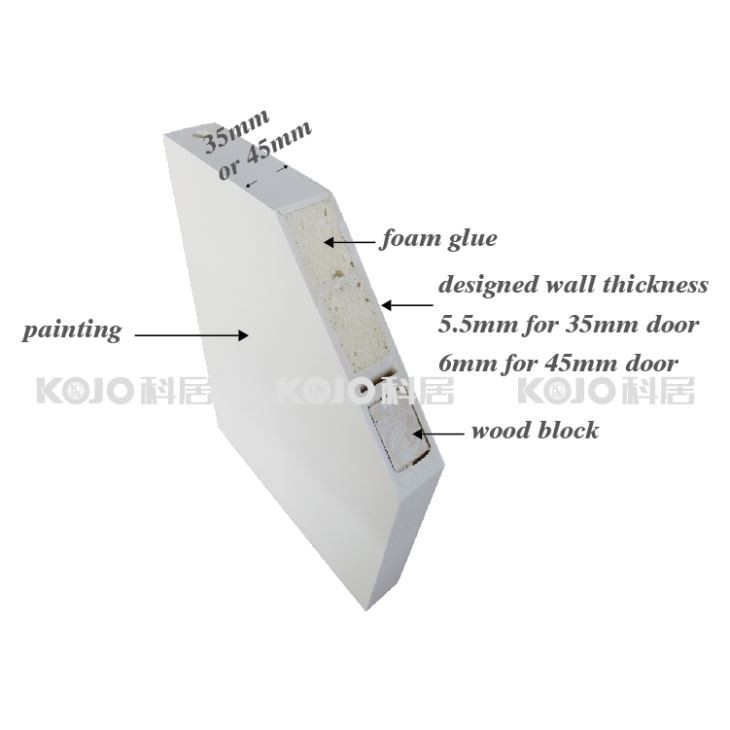
Solid core WPC units represent the pinnacle of composite door engineering. These premium slabs boast a density exceeding 800 kg/m³. We highly recommend this specification for luxury builds and commercial projects. The dense internal structure delivers exceptional screw-holding capacity, ensuring hinges never sag. You gain incredibly high impact resistance against daily physical abuse.
Most importantly, solid cores provide superior soundproofing. They routinely achieve Sound Transmission Class (STC) ratings between 30 and 38 decibels. This acoustic isolation blocks conversational noise and plumbing sounds effectively. These heavy-duty doors suit master bathrooms, hotel suites, and premium residential builds perfectly.
Manufacturers create tubular alternatives using extruded geometric hollow chambers running vertically through the door. This smart internal engineering reduces overall weight drastically. It lowers material costs significantly while maintaining excellent structural rigidity. The hollow design prevents the slab from bending or warping under its own weight.
However, you must accept compromises in acoustic performance. Hollow chambers transmit sound waves more easily, typically dropping the acoustic rating to 20-25 STC. Impact resistance also falls short of solid counterparts. We suggest deploying hollow core WPC doors for standard residential bathrooms, utility spaces, or budget-conscious multi-unit developments.
You should never trust marketing brochures alone. Always verify the core quality physically before purchasing in bulk. Low-grade suppliers often use cheap, weak fillers hidden beneath decent surface laminates.
Weight Test: Lift the door slab manually. Suspiciously light doors usually contain inferior, low-density foam fillers. A genuine solid WPC door feels substantial and heavy.
Acoustic Knock: Rap your knuckles against the center panel. A solid, dull thud indicates a tightly packed, dense core. Excessive echoing or a high-pitched rattle suggests unacceptably thin walls.
Cut-Surface Inspection: Demand cross-section samples from your supplier. Inspect the raw cut edges closely. You should observe a clean, seamless extrusion. Reject any samples showing irregular air pockets or crumbly fiber textures.
Feature Focus | Solid Core WPC | Hollow/Tubular Core WPC |
|---|---|---|
Material Density | >800 kg/m³ | Variable (Relies on geometric web thickness) |
Acoustic Rating (STC) | 30 - 38+ dB | 20 - 25 dB |
Impact Resistance | Exceptional (Suitable for commercial use) | Moderate (Suitable for standard residential use) |
Hardware Support | Holds heavy mortise locks securely | Requires internal blocking for heavy hardware |
Best Application | Hotels, Master Baths, High-Traffic Zones | Guest Baths, Laundry Rooms, Closets |
Many buyers fall into a costly architectural trap. They purchase a high-end WPC waterproof door but install it inside a standard wooden or MDF door jamb. This ruins the entire installation. Bathroom floor tiles frequently hold standing water. Wood frames act like wicks, drawing moisture upward through capillary action. The jamb will inevitably rot and swell, causing the waterproof door slab to jam. You must insist on matching WPC or marine-grade aluminum frames. A complete, cohesive system guarantees full protection from floor to header.
Edge sealing integrity plays a massive role in longevity. Top-tier factories apply specialized edge banding using waterproof polyurethane (PUR) adhesives. This seals any microscopic gaps left after cutting the slab. While WPC inherently resists water, flawless edge sealing stops vapor ingress completely. Bathrooms experience extreme temperature shifts daily. Proper edge sealing maintains the door's structural integrity through decades of thermal expansion and contraction.
You must also evaluate hardware compatibility carefully. Wet zones destroy standard zinc-plated hinges quickly. Acidic bathroom cleaners and high humidity corrode cheap metals within months. We strongly recommend specifying 304 or 316 stainless steel hardware. Heavily anodized aluminum handles also prevent rust effectively. Furthermore, modern projects often feature heavy smart locks or large glass inserts. Tubular WPC doors require internal structural reinforcements—usually solid polymer blocks embedded at the factory—to support these heavy accessories safely.
Bathrooms represent the most hostile indoor environments. They demand absolute water resistance against direct shower splashes and constant steam. They also require complete privacy for users. We recommend installing a dedicated WPC bathroom door featuring a high-density solid core. Ensure the factory seals all four edges perfectly. You might incorporate frosted tempered glass inserts into the design. These allow natural light transmission into dark hallways without sacrificing occupant privacy.
Kitchens and laundry rooms present a different set of challenges. Humidity fluctuates rapidly based on cooking or washing cycles. Airborne grease and chemical detergents coat surfaces regularly. You need a reliable moisture-proof interior door offering exceptional cleanability. Select WPC doors finished with protective exterior laminates. UV-cured surface coatings work exceptionally well here. They resist harsh chemical degreasers, repel oil stains, and handle sporadic steam effortlessly without losing their visual appeal.
Subterranean spaces and indoor pool areas suffer from constant, relentless dampness. These zones carry a severe risk of black mold colonization. Insect damage also threatens subterranean wood installations heavily. For these punishing environments, specify fully extruded, solid WPC configurations. Apply specialized anti-fungal surface treatments. Always demand maximum warp warranties from the manufacturer, as these areas experience minimal ventilation and high ambient moisture year-round.
Environment Type | Primary Material Threats | Recommended WPC Configuration |
|---|---|---|
Bathrooms/Wet Rooms | Direct water splashes, high steam, cleaning acids | Solid core, PUR factory-sealed edges, 304 stainless hinges |
Kitchens | Grease buildup, fluctuating heat, mild steam | Protective laminate, UV-cured coating, easy-wipe surface |
Basements/Pools | Constant dampness, mold spores, subterranean insects | Anti-termite profile, anti-fungal treatment, maximum warranty |
The global materials market contains many low-grade plastics disguised as premium composites. You must filter out these inferior products by demanding rigid proof of quality. Ask manufacturers for comprehensive zero-VOC emissions testing reports. This ensures the doors will not off-gas formaldehyde or harm indoor air quality. Request SGS or CE certifications to verify structural claims. If local building codes dictate, you must also verify fire ratings. Look for documented EN 16034 or UL compliance before signing a purchase order.
Multi-unit residential developments require immense logistical planning. Contractors must view procurement through a lens of installation efficiency. We emphasize the massive value of sourcing pre-hung WPC door systems. Premium factories pre-drill hinge locations and lockset cavities using precision CNC machines. This eliminates frustrating on-site cutting errors. It drastically reduces expensive carpenter labor costs. Installers simply plumb and secure the pre-assembled frame and door unit directly into the rough opening.
Finally, establish strict warranty benchmarks. Trustworthy manufacturers stand firmly behind their extrusion technology. They should offer a minimum 5-to-10-year commercial warranty. Read the fine print carefully. This document must explicitly cover moisture-induced swelling, catastrophic delamination, and structural warping. Ensure the warranty terms cover the matching frames equally. A strong warranty indicates a stable, highly engineered polymer recipe.
Investing in advanced composite door technology acts as a fundamental exercise in risk mitigation. You drastically reduce long-term maintenance burdens across your property. You eliminate the frustrating, frequent replacement cycles that continually plague traditional wood and MDF products in wet zones.
Take actionable steps before finalizing your next material purchase order. Request physical cross-section samples from your shortlisted suppliers. Verify the exact core density and inspect the extrusion quality yourself. Most importantly, ensure your quotes include a matching moisture-proof WPC or aluminum frame system. Protect your architectural projects by demanding certified, system-wide moisture resistance. Making the right specification choice today secures decades of flawless, maintenance-free performance.
A: Yes. While WPC arrives in various factory-applied laminates and textured finishes, you can customize it further. If you desire refinishing, you must use specific PVC-compatible paints. Standard wood paints will not adhere properly to the dense polymer surface. Always clean the door thoroughly and apply specialized vinyl or plastic bonding primers before painting.
A: It depends entirely on the internal core structure. A solid core WPC unit typically weighs slightly more than a solid wood equivalent due to its dense polymer matrix. Conversely, hollow tubular WPC configurations weigh significantly less. Regardless of the type chosen, you must use appropriate load-bearing hinges during installation.
A: WPC offers a superior balance of aesthetics and structural strength. It provides realistic wood-like textures alongside rigid impact resistance. UPVC achieves excellent waterproofing but often feels plasticky and lacks premium weight. Fiberglass resists moisture perfectly and insulates well, but it commands a much higher upfront cost than standard composite alternatives.