Views: 0 Author: Site Editor Publish Time: 2026-09-09 Origin: Site
High-humidity environments routinely compromise interior finishes. They cause severe structural degradation over time. You often face aesthetic failures and costly remediation efforts. Traditional organic materials actively absorb moisture. This leads directly to warping, swelling, and eventual rot. Standard synthetic alternatives frequently fail to impress. They often lack structural rigidity or appealing visual aesthetics. Moistureproof WPC wall panels offer a highly engineered composite solution. Designers created them specifically to bridge this gap. They blend architectural aesthetics seamlessly into high-moisture durability. WPC proves incredibly resilient in demanding applications. However, realizing its full lifecycle value requires careful planning. You must understand essential material properties first. Evaluating appropriate application zones is crucial for success. Finally, you need to acknowledge standard installation realities. We will explore how these composites redefine damp interior spaces.
Polymer encapsulation of wood fibers prevents moisture absorption, ensuring long-term dimensional stability in damp environments.
WPC serves as a highly effective mildew resistant wall panel by depriving mold spores of accessible organic food sources.
Optimal performance in high-risk areas requires strict adherence to expansion gap tolerances and proper edge sealing protocols.
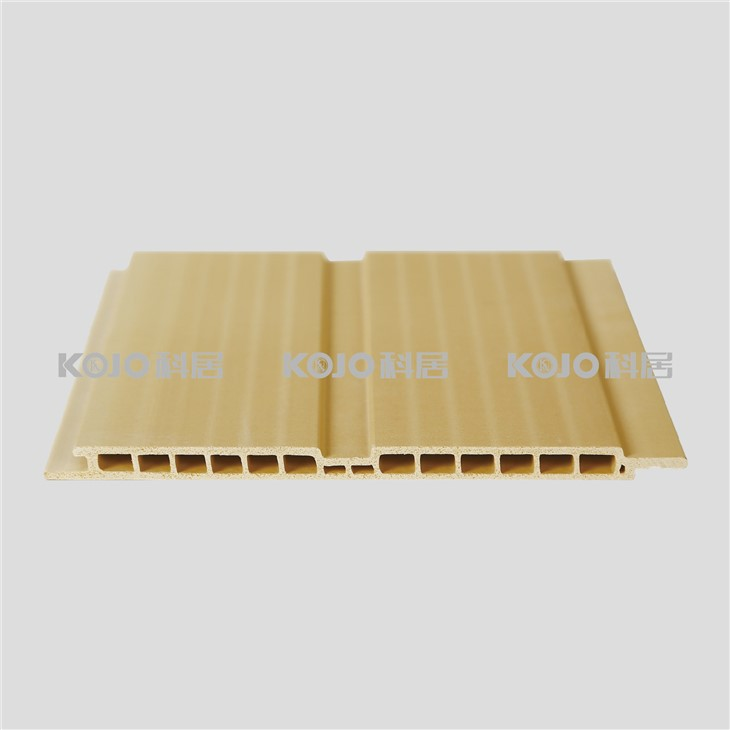
Material specifications (solid vs. fluted cores, capping technology) dictate suitability for specific applications like basement renovations or bathroom upgrades.
Wood-Plastic Composite (WPC) relies on precise material science. Manufacturers combine thermoplastics and finely ground wood flour. The ratio typically hovers around 60% wood fibers to 40% polymers and additives. Thermoplastics fully encapsulate the hygroscopic wood particles. This polymer matrix creates a dense, impenetrable barrier. It actively blocks water vapor from reaching the core. High-density polyethylene (HDPE) or PVC typically forms this protective polymer base.
Dimensional stability remains a massive advantage for these composites. Standard MDF or solid wood reacts poorly to humidity fluctuations. They absorb ambient moisture rapidly. This leads to swelling, bowing, and structural delamination. WPC composite structures resist these fluctuations entirely. They keep their shape across diverse climate conditions. You will not see the material warp during humid summer months.
Advanced profiles often utilize specialized capping technology. Manufacturers co-extrude a protective shield directly over the core material. This outer layer significantly enhances surface resistance. It repels ambient moisture effectively. It also withstands harsh chemical cleaning agents commonly used in wet zones. The dual-layer approach guarantees maximum protection against daily wear and tear.
We must evaluate material performance objectively for wet areas. Let us contrast WPC against solid wood cladding. Wood demands continuous maintenance to survive persistent dampness. You must sand and seal it regularly. You also need strict climate control to prevent dry rot. Conversely, a waterproof WPC panel remains fundamentally inert. It ignores ambient moisture entirely. You eliminate endless sealing routines from your maintenance schedule.
Next, compare WPC to standard PVC options. Pure PVC offers complete water resistance. However, it presents distinct structural drawbacks over time. Standard PVC can become brittle after years of exposure. It frequently looks overly synthetic and cheap. WPC offers a heavier, more rigid profile. It mimics natural wood textures beautifully. You gain visual warmth without inheriting the moisture liability of natural timber.
Consider the long-term financial implications carefully. Legacy materials incur massive upkeep expenses over their lifespan. WPC eliminates sanding, staining, and chemical sealing tasks. You save substantial labor hours annually. It also boasts extended replacement cycles. The upfront investment pays off through extreme longevity and zero-hassle upkeep. Your interior finishes simply last longer under harsh conditions.
Cladding Material Performance Comparison
Material Type | Moisture Resistance | Maintenance Level | Structural Rigidity |
|---|---|---|---|
Solid Wood | Low (Requires constant chemical sealing) | High | High |
Standard PVC | High (Fully waterproof surface) | Low | Low (Can become brittle over time) |
WPC Panels | High (Inert to ambient humidity) | Zero to Low | High (Rigid composite core) |
Mildew plagues high-humidity interiors relentlessly. We must understand the fundamental biological mold equation first. Mold requires three basic elements to thrive. It needs moisture, adequate warmth, and an organic food source. Bathrooms and basements supply moisture and warmth abundantly. Organic wall coverings provide the perfect food source for these spores.
WPC disrupts this biological process efficiently. It functions as an exceptional mildew resistant wall panel. The plastic encapsulation surrounds the wood fibers completely. It cuts off access to this organic material. Mold spores land on the surface but starve. They cannot consume the encased wood flour. The material deprives them of essential nutrients.
We must maintain transparent limitations regarding these claims, however. The panel itself will not rot or degrade. It will not host mildew internally. Still, surface dirt can accumulate over time. Soap scum builds up quickly in wet environments. These external residues can harbor mold independently. "Resistant" does not mean "self-cleaning." You must wipe down the surfaces periodically to maintain a sterile environment.
Proper specification ensures long-term project success. You must match the panel profile to the specific environment.
Basements present unique environmental challenges for homeowners. They suffer from subterranean dampness continuously. Hydrostatic pressure risks constantly threaten the foundation walls. Poor ventilation exacerbates these damp conditions further. Traditional drywall crumbles quickly in these subterranean spaces. It absorbs ground moisture like a sponge.
Using WPC for basement wall cladding solves this dilemma perfectly. Installers typically mount these panels on furring strips or battens. This creates a necessary breathable air gap behind the cladding. Air circulates freely behind the installation to keep concrete dry. Meanwhile, the panels remain completely unaffected. Ambient basement humidity cannot degrade the engineered composite structure.
Bathrooms require careful zone planning during renovations. You must differentiate between various moisture levels. "Splash zones" exist behind sinks, vanities, and toilets. These areas experience intermittent water exposure. "Direct immersion zones" occur inside shower enclosures. These spaces face continuous, heavy water volume.
A bathroom WPC panel excels across standard splash zones. It manages severe condensation brilliantly across the room. It also offers superior ease of sanitation. You simply wipe the smooth surface clean. Porous tile grout traps dirt and requires intense chemical scrubbing. WPC provides a seamless, hygienic alternative for modern wet-room walls.
Material quality alone cannot guarantee overall success. Your installation methodology determines the ultimate outcome. Even premium panels fail under poor installation practices.
Substrate preparation remains entirely non-negotiable. You must ensure a dry, structurally sound substrate beforehand. WPC easily covers existing moisture damage aesthetically. However, it does not fix underlying plumbing leaks. It cannot stop foundation weeping or active structural decay. You must resolve these core issues first. Hiding a leak behind a panel only breeds disaster.
Composites respond predictably to thermal and moisture changes. You must respect the physics of these building materials. They experience micro-shifts during extreme temperature fluctuations. Installers must leave engineered expansion gaps. You need these gaps at the ceiling and floor lines. Joints also require adequate breathing room. Failing to accommodate natural expansion causes unsightly buckling.
Edge and joint sealing requires meticulous attention from installers. Professionals often cut panels to fit specific room dimensions. These exposed cut edges represent significant vulnerabilities. You must treat them properly before final placement. Seal them using appropriate trims or high-grade neutral-cure silicone. This prevents moisture capillary action completely. Water must not compromise the inner panel core.
Review these common installation mistakes to protect your investment:
Ignoring manufacturer guidelines regarding 48-hour material acclimatization before installation.
Fastening panels too tightly against the wall, preventing natural thermal expansion.
Applying composite panels directly over actively leaking or crumbling drywall substrates.
Skipping necessary silicone sealant on freshly cut bottom edges in wet zones.
Selecting the perfect panel requires strategic evaluation. You should assess several key performance factors before purchasing.
First, evaluate your core design selection carefully. You typically choose between fluted and solid structural profiles. Fluted panels offer lightweight handling for easier installation. They provide unique decorative aesthetics and minor acoustical benefits. Solid panels deliver maximum impact resistance. You should base your choice directly on room traffic. High-traffic hallways demand solid core durability.
Density and weight metrics matter significantly for longevity. High panel density improves impact resistance drastically. Commercial spaces require dense materials to survive daily abuse. Heavy-use residential wet zones benefit from heavier profiles too. Lighter, cheaper panels might dent under heavy impact. Always check the density specifications.
We strongly encourage specifiers to take next-step actions. Do not rely on digital images or brochures alone. Request physical samples from the manufacturer directly. You need to touch and test the material yourself.
Follow these practical steps for sample evaluation:
Examine the capping layer closely for consistency and protective thickness.
Test water-beading properties by pouring standing water directly on the surface.
Inspect the core density manually to gauge overall structural integrity.
Review manufacturer warranty stipulations specifically regarding high-humidity interior installations.
Moistureproof WPC wall panels transform interior design completely. They shift damp-space planning away from a defensive strategy. You no longer worry about constant maintenance or rot. Instead, you adopt a proactive, design-forward solution. These panels bring visual warmth without the associated moisture liabilities.
We must reinforce the importance of proper installation. Correct sealing and calculated expansion gaps validate the material's durability. Shortcuts during setup will compromise the entire system eventually. You must respect the material guidelines.
Take decisive action on your next renovation project today. Contact our technical support team for detailed installation guidelines. Request a physical sample box to feel the texture firsthand. Review the comprehensive product catalog to match your architectural finishes perfectly.
A: Most standard WPC panels handle splash zones perfectly. However, direct immersion zones like shower cubicles require specific formulations. You must distinguish between highly water-resistant cladding and 100% waterproof barrier systems. We recommend specialized shower-rated WPC products or alternative engineered plastics for direct, continuous water flow applications.
A: No. While the WPC material itself will not rot, installing it over damp drywall proves dangerous. You must resolve any underlying moisture issues first. Trapping moisture behind the panel accelerates the structural decay of your substrate and encourages severe hidden mold growth.
A: Maintenance requires minimal effort. Wipe the surface using warm water and a mild, non-abrasive household cleaner. Use a soft cloth or sponge to remove daily soap scum. You must avoid harsh bleach, abrasive scouring pads, or highly acidic solvents. These can permanently damage the protective surface finish.
A: WPC adds physical mass to your walls, but it is not a primary insulator. It does not replace proper foam or fiberglass insulation. However, fluted panels trap small amounts of air within their hollow chambers. This trapped air provides a very minor thermal break against cold foundation walls.