Views: 0 Author: Site Editor Publish Time: 2026-06-25 Origin: Site
Floor-to-wall transitions remain high-traffic zones vulnerable to intense physical impact. Moisture damage and continuous pest infiltration also plague these low-lying architectural seams daily. Traditional edge protection materials often fail rapidly under such demanding commercial environments. You need reliable structural barriers. The WPC skirting board emerges as a highly engineered alternative designed to mitigate these exact vulnerabilities. By blending durable wood fibers and advanced thermoplastic resins, manufacturers create a superior, non-porous profile.
Our comprehensive guide provides architects, building contractors, and procurement managers a clear evaluation framework. You will learn how to accurately select, specify, and properly source these composite baseboards. We explore material science mechanisms, crucial compliance standards, and proven installation methods. This knowledge helps you ensure lasting structural integrity across modern residential and demanding commercial projects.
Moisture and Pest Resistance: WPC's composite structure inherently prevents the swelling and termite damage typical of MDF and wood.
Compliance and Safety: High-grade WPC options function as flame-retardant skirting, meeting strict commercial building codes.
Application Versatility: Suitable for both interior wet rooms (bathrooms, commercial kitchens) and outdoor decking perimeters.
Procurement Focus: Sourcing decisions should prioritize profile consistency, UV resistance (for exterior use), and verified structural composition over baseline pricing.
Building professionals constantly battle the rapid degradation of traditional floor trims. Medium-Density Fiberboard (MDF) relies heavily on internal adhesives and wood pulp. It absorbs water through capillary action almost immediately upon contact. The core swells rapidly. The outer laminate peels away. Structural integrity vanishes. Solid wood trim presents equally frustrating challenges. Wood warps under fluctuating humidity. It also invites destructive termite colonies. In commercial settings or damp environments, these legacy materials simply fail too often.
Wood Plastic Composite (WPC) material science solves these foundational flaws. Engineers blend fine wood fibers and durable thermoplastic resins during manufacturing. High heat and pressure extrude this mixture into a solid, unified core. The polymer matrix completely encapsulates every individual wood fiber. This microscopic encapsulation blocks moisture penetration completely. You get a dense, non-porous barrier. The resulting WPC baseboard withstands heavy impacts while remaining entirely impervious to rot and insect attacks.
We must analyze the physical lifespan and maintenance cycles of these edge transitions. Traditional trims require constant sanding, repainting, and eventual tear-outs. Facility teams spend countless labor hours managing water-damaged MDF. WPC eliminates this repetitive maintenance cycle entirely. The composite resists scuffs from cleaning equipment. It ignores localized flooding. By specifying a high-density composite, you drastically reduce long-term replacement frequency. This proactive choice keeps facilities operational and visually pristine for decades.
Not all composites deliver identical performance. You must evaluate the internal material ratios carefully. The specific balance between PVC polymers and wood fibers dictates overall dimensional stability. A higher polymer content generally yields greater flexibility. A higher wood fiber content increases rigidity. You need an optimal balance to survive aggressive foot traffic. Carts, vacuum cleaners, and moving furniture strike baseboards constantly. Properly formulated WPC wall skirting absorbs these localized impacts without cracking or denting.
Moisture resistance metrics require rigorous verification. You cannot rely on vague marketing claims. In flood-prone zones or high-humidity commercial kitchens, you need absolute assurance. A true waterproof skirting board achieves a water absorption rate near zero percent. We recommend reviewing manufacturer technical data sheets. Look for standardized immersion test results. The board should exhibit zero dimensional swelling after prolonged underwater submersion.
Commercial building codes demand strict fire safety standards. You must specify a certified flame-retardant skirting for any public interior space. Evaluators should look for the Class B1 fire rating. A Class B1 certification guarantees the material resists initial ignition. It also stops burning immediately once you remove the primary flame source. It prevents the rapid spread of fire along corridor walls. Always demand independent testing certificates from your suppliers.
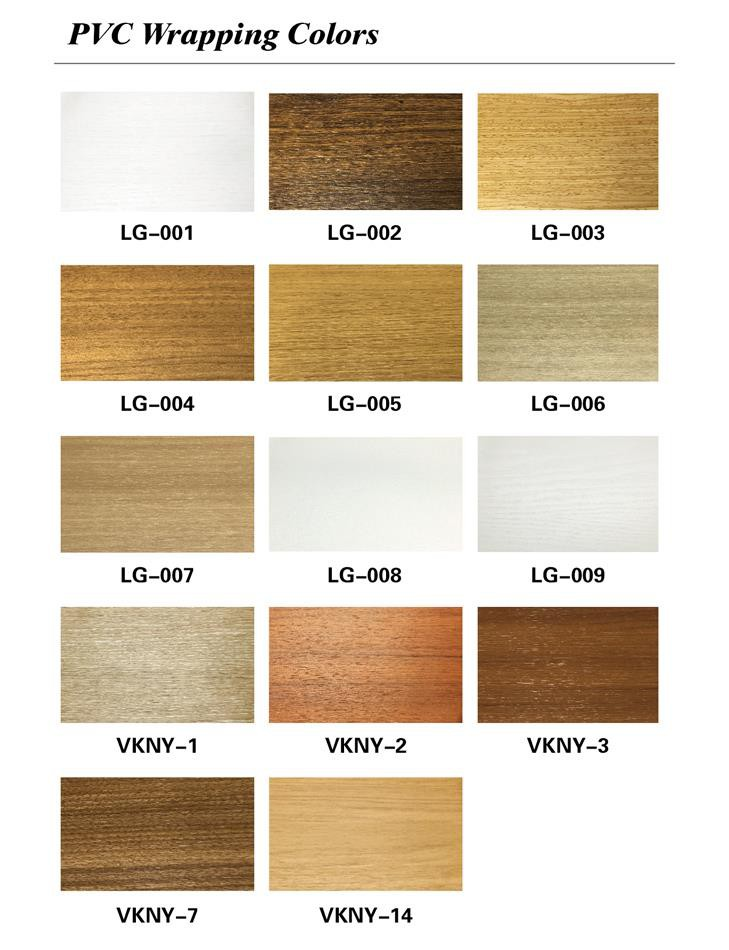
Visual integration matters just as much as physical performance. Modern interiors favor minimalist transitions. You must assess available surface treatments. Some manufacturers use high-quality lamination films. Others use co-extrusion techniques to embed textures directly into the surface. Evaluate slim profile designs against standard bulky alternatives. Slim profiles match modern SPC or luxury vinyl flooring seamlessly. They provide robust edge protection without imposing a heavy visual footprint on the room.
Standard Evaluation Metrics for WPC Profiles | ||
Metric Category | Key Benchmark | Expected Result |
|---|---|---|
Water Absorption | 24-Hour Submersion Test | < 0.5% swelling or dimension change |
Fire Resistance | Class B1 (DIN 4102-1 or equivalent) | Self-extinguishing; no flame spread |
Impact Strength | Falling Weight Test | No visible cracking or delamination |
Density | Core Mass Check | 0.8 - 1.2 g/cm³ for optimal rigidity |
Different environments dictate unique material formulations. When specifying an interior skirting board, hygiene and cleanability take precedence. Hospitals, schools, and homes require smooth profiles. They must wipe down effortlessly. Interior trims also serve a vital mechanical function. They hide the necessary expansion gaps left around floating floors. A well-designed interior profile provides adequate floor coverage while remaining flush against the drywall.
Outdoor applications demand entirely different chemistry. Composite decking perimeters face brutal environmental conditions. Exterior edge banding absorbs direct sunlight, freezing rain, and extreme temperature swings. Standard interior grades will fade and become brittle outdoors. You must specify exterior-grade formulations loaded with advanced UV-inhibitors. These chemical stabilizers prevent ultraviolet radiation from breaking down the polymer matrix. They ensure the edge banding retains its color and structural flexibility over years of weather exposure.
Material compatibility drives aesthetic success. WPC aligns functionally with modern flooring systems like SPC, LVT, and traditional porcelain tiles. Because it shares a similar polymer base with vinyl floors, the visual transition looks natural. Many manufacturers coordinate their lamination films to perfectly mimic popular oak, walnut, or concrete floor finishes. You achieve a cohesive architectural flow.
Application Suitability Chart: Interior vs. Exterior | ||
Feature Requirement | Interior Application | Exterior Application |
|---|---|---|
UV Resistance | Low priority | Critical (High UV-inhibitor load) |
Profile Geometry | Slim, decorative, hides floor gaps | Thick, robust, structural edge sealing |
Hygiene & Cleaning | Smooth surface, anti-microbial options | Textured, slip-resistant finish |
Proper installation methodology separates a lasting architectural detail from a failing one. Contractors generally choose between two primary attachment systems. The hidden clip system utilizes mounting brackets screwed directly into the wall. Installers simply snap the trim onto these tracks. This method eliminates visible nail holes. It provides seamless aesthetics. It also allows easy removal if facility managers need to run new cabling later. Alternatively, contractors use direct adhesive or pneumatic nailing approaches. Adhesives work well on uneven masonry walls where drilling proves difficult. However, removing glued trim often destroys the drywall behind it.
Thermal expansion requires careful management. Composite materials respond to ambient temperature changes. They expand in extreme heat. They contract in severe cold. Failing to accommodate this movement guarantees buckled trim. You must follow strict acclimatization procedures before cutting.
Acclimatization: Store the boards flat in the installation room for at least 48 hours prior to cutting. This equalizes the material temperature.
Perimeter Gapping: Leave a calculated expansion gap (typically 2-3mm) at hard stops and door frames.
Clip Spacing: Space hidden mounting clips exactly according to manufacturer guidelines (usually every 400mm) to prevent sagging.
Adhesive Selection: Only use flexible, polymer-based construction adhesives. Rigid glues will snap during natural thermal movement.
Contractors often repeat common failure patterns. Using incompatible adhesives ranks highest among these errors. Standard wood glues cannot bond with non-porous thermoplastic resins. Another frequent mistake involves mitred corners in wet environments. Installers often cut beautiful 45-degree angles but fail to seal the joint. In commercial bathrooms, water seeps behind unsealed joints and fosters unseen mold growth. You must apply a clear, mold-resistant silicone sealant inside every cut corner. This practice guarantees a truly waterproof barrier.
Procurement teams face a saturated market filled with varying quality levels. You must shortlist suppliers based on strict engineering tolerances. Batch-to-batch color consistency remains a critical success factor for large-scale enterprise projects. If a manufacturer uses inconsistent raw materials, phase two of your project will not match phase one visually. Profile tolerance matters equally. Variations in extrusion thickness cause misaligned joints. You cannot achieve seamless long runs if the thickness fluctuates by even one millimeter.
Request comprehensive factory certifications. Do not accept internal company letters as proof of performance. Demand accredited third-party documentation.
ISO Certification: Verifies the factory maintains rigorous quality control management systems.
SGS Testing Reports: Provides independent verification of anti-termite, anti-mould, and structural density claims.
CE/UL Marks: Confirms the product passes international health, safety, and fire-retardant standards.
Enterprise rollouts require extensive customization. Evaluate suppliers based on their accessory ecosystem. Can they provide matching internal corner pieces? Do they manufacture external corner caps and finishing end caps? Cutting mitres on-site consumes massive labor hours. Snap-on accessories reduce installation time drastically. Furthermore, assess their custom color-matching capabilities. Large hotel chains or corporate offices often require bespoke laminate colors to match proprietary branding guidelines. A capable factory will accept a physical floor sample and produce an exact matching trim.
Specifying composite edge protection serves as a proactive defense against moisture degradation. Traditional wood and MDF inevitably warp, swell, and invite pests in demanding environments. WPC eliminates these vulnerabilities through advanced material engineering. You secure lasting structural integrity while minimizing ongoing maintenance requirements across commercial and residential spaces.
Decision-makers should take immediate, concrete next steps to validate these materials. First, request physical profile samples from shortlisted manufacturers to assess surface finish and core density. Second, review the corresponding technical data sheets (TDS) thoroughly. You must verify actual fire ratings and moisture absorption percentages. Finally, test the manufacturer's specific clip-system compatibility directly against your proposed floor setups. Physical mockups ensure a seamless, professional transition before wide-scale deployment begins.
A: Yes, but it requires specific preparation. Because the polymer surface is non-porous, standard wall paints will peel. You must lightly sand the surface to create a mechanical grip. Wipe away all dust, then apply a high-quality primer formulated specifically for plastics or composites. Once primed, you can apply an acrylic or polyurethane topcoat successfully.
A: WPC offers superior rigidity and a heavier, wood-like feel due to its internal wood fibers. It resists heavy impacts better than hollow PVC profiles. Standard PVC skirting is lightweight and extremely water-resistant, but it can feel hollow, look artificial, and dent more easily under physical pressure.
A: High-quality WPC baseboards are functionally waterproof. Unlike "water-resistant" treated MDF, which eventually swells if the outer coating scratches, WPC's internal core combines polymers and encapsulated wood fibers. This non-porous structure prevents capillary action entirely, allowing it to survive continuous submersion or regular flood-mopping without dimensional changes.
A: Standard manufacturing lengths typically range between 2.2 meters and 2.9 meters. Installers handle visible seams on long walls by cutting precise 45-degree scarf joints. This overlapping cut hides expansion gaps and creates a seamless visual line. Alternatively, many manufacturers supply color-matched joining brackets to conceal straight butt joints quickly.