Views: 0 Author: Site Editor Publish Time: 2025-12-12 Origin: Site
When renovating or updating an old home, uneven floors are a common challenge that many face. Traditional skirting installation often proves difficult when the floor is not level, leading to gaps between the wall and skirting. These gaps can create unsightly seams, trap dust, and lead to further complications during installation. To solve this problem, self-adhesive WPC (Wood-Plastic Composite) skirting has emerged as a practical and efficient solution. This article will guide you through the benefits of self adhesive skirting and how it can be the perfect choice for uneven floors, helping to achieve a seamless and long-lasting finish with minimal effort.
Uneven floors are a common issue in older homes or when updating an existing space. Traditional skirting boards, which often require nails or screws for installation, can be difficult to affix to a floor that is not level. Here are some of the main challenges posed by uneven floors:
When installing traditional skirting boards on an uneven floor, gaps often form between the skirting and the wall. These visible seams not only disrupt the visual appeal of the space but also create an environment where dust, dirt, and moisture can accumulate. Over time, this can lead to mold growth, staining, and a general decrease in the skirting’s lifespan.
One of the biggest issues with uneven floors is the difficulty in securely fixing the skirting. Nailing or screwing skirting boards onto an uneven surface can be tricky, often resulting in loose or unstable installation. This can lead to a poor finish, with the skirting pulling away from the wall or shifting out of place over time. Additionally, this type of installation may require extra time, labor, and even floor-leveling work, which can increase both the cost and complexity of the renovation.
Self-adhesive skirting boards are a modern solution that eliminates many of the challenges posed by traditional installation methods. As the name suggests, these skirting boards come with an adhesive backing that allows them to be directly applied to the wall, eliminating the need for nails or screws.
The main advantage of self adhesive skirting is that it offers a much simpler installation process, particularly for uneven floors. Without the need for nails or screws, these skirting boards can be applied directly to the wall, even if the floor is not level. The adhesive backing allows the skirting to bond securely to the surface, making it easy to achieve a seamless finish without worrying about gaps or uneven seams. This makes self-adhesive skirting an ideal solution for renovation projects or spaces where traditional installation methods may be impractical.
Self-adhesive skirting is more forgiving than traditional options because it allows for flexibility in installation. If the skirting is not aligned correctly or if you need to make adjustments, the adhesive provides some leeway for repositioning without damaging the wall or the skirting itself. This makes the installation process faster and less stressful, especially for DIY enthusiasts who may not have prior experience with traditional skirting installation methods.
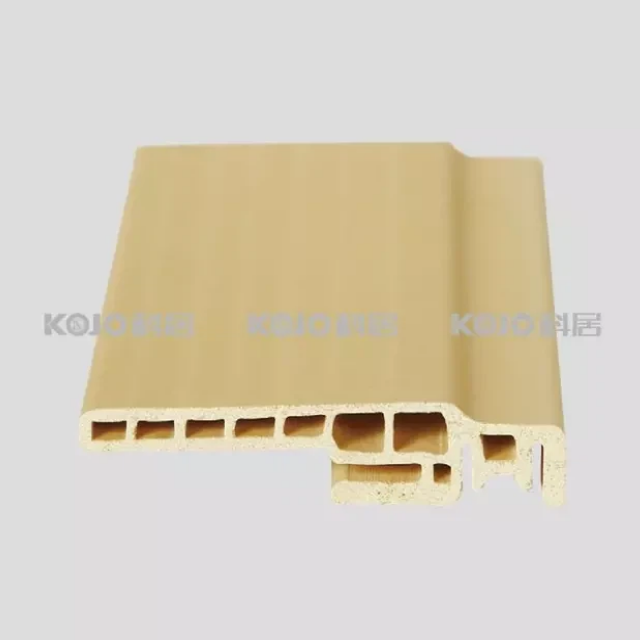
WPC skirting, which combines wood fibers and plastic polymers, offers several advantages when used as a self-adhesive option. This material ensures that the skirting board is both lightweight and durable, making it perfect for adhesive installation.
The composite nature of WPC skirting means that it is lighter than traditional wood skirting, which makes it easier to handle and apply. A lighter skirting board places less stress on the adhesive bond, ensuring that the skirting stays securely attached to the wall over time. In contrast, traditional wood skirting can be heavier, which may cause the adhesive to break down more quickly, especially on uneven surfaces.
Another advantage of WPC skirting is its surface finish and stability. WPC material is designed to resist cracking and warping, even under stress or changing environmental conditions. This means that the adhesive bond will remain intact for longer periods, and the skirting will maintain its shape without expanding or contracting like traditional wood. The result is a longer-lasting, more durable installation that won’t require constant upkeep.
Installing self-adhesive WPC skirting on uneven floors requires some preparation and attention to detail to ensure a successful and lasting installation. Follow these steps for the best results:
Before applying the adhesive skirting, it is crucial to prepare the surface properly. Clean and dry the wall to remove any dust, dirt, or grease that could interfere with the adhesive bond. Use a damp cloth to wipe down the surface and allow it to dry completely. If the floor is particularly uneven, try to level the wall as much as possible to minimize any gaps or misalignments.
The adhesive you choose is critical for ensuring a strong bond between the skirting and the wall. Opt for a high-quality adhesive that is specifically designed for plastic or wood-plastic composite materials. This will ensure that the skirting adheres securely to the wall and will remain in place for an extended period.
When applying the skirting, align it carefully with the wall and press it firmly into place. Use consistent pressure along the length of the skirting to ensure a smooth, even application. Pay special attention to the edges and corners to ensure that they are securely attached, as these areas are more prone to lifting if not properly pressed.
If the skirting is being installed in a bathroom or kitchen where moisture is a concern, consider sealing the top edge of the skirting after installation. This will prevent moisture from seeping in between the skirting and the wall, helping to preserve the integrity of the adhesive and the skirting itself.
While self adhesive skirting is a great option for many renovation projects, there are some limitations and considerations to keep in mind.
Self-adhesive skirting may not be the best option for areas that are exposed to heavy impacts or frequent movement. For example, in high-traffic areas or areas near furniture, nails or screws may be necessary for a more secure and long-lasting installation.
If the floor is severely uneven, with large gaps between the wall and the skirting, self-adhesive skirting may not provide the desired effect. In such cases, it may be necessary to level the floor or use custom fillers to ensure that the skirting fits securely. Otherwise, the adhesive bond may weaken over time, leading to potential gaps or misalignment.
Self-adhesive skirting works best when the environment is clean and dry. In particularly humid or dusty environments, the adhesive may lose its effectiveness over time, causing the skirting to peel away from the wall. It is important to monitor the condition of the adhesive bond and replace the skirting if necessary.
KOJO’s WPC skirting is designed with both ease of installation and durability in mind, making it an ideal choice for self-adhesive applications.
KOJO’s WPC skirting is made from high-density composite materials that provide stability and durability, ensuring that the skirting will remain securely attached to the wall. The lightweight nature of the material makes it easier to handle and install, even on uneven floors.
KOJO’s WPC skirting offers a clean, modern aesthetic that enhances any space, even in challenging installation scenarios like uneven floors. The self-adhesive design reduces labor and installation costs, providing a cost-effective solution for renovation projects.
For renovation projects or floors with uneven surfaces, self-adhesive WPC skirting provides a practical, aesthetic, and cost-effective solution. By eliminating the need for nails or screws, self-adhesive skirting boards make installation easier and faster, even on uneven floors. KOJO’s high-quality WPC skirting is designed to offer durability, stability, and a smooth finish, ensuring that your project will be completed with ease and long-lasting results.
For more information on our WPC skirting boards, contact us today!
Q1: Is self-adhesive skirting suitable for uneven floors?
A1: Yes, self-adhesive skirting is an excellent solution for uneven floors as it can be applied directly to the wall without the need for nails or screws.
Q2: How should I prepare the surface before installing self-adhesive WPC skirting?
A2: Clean and dry the surface to remove any dust, dirt, or grease. Ensure that the wall is as level as possible before applying the skirting.
Q3: Can I use self-adhesive WPC skirting in bathrooms or kitchens?
A3: Yes, KOJO’s self-adhesive WPC skirting is moisture-resistant and can be used in bathrooms and kitchens, but it’s advisable to seal the top edge to prevent moisture ingress.
Q4: What makes KOJO’s WPC skirting ideal for self-adhesive installation?
A4: KOJO’s WPC skirting is made from high-density, lightweight composite materials that ensure stable and reliable adhesion, even on uneven surfaces, making it perfect for renovation projects.


