Views: 0 Author: Site Editor Publish Time: 2025-12-19 Origin: Site
When installing WPC skirting in spaces with floor heating, it is essential to consider how temperature fluctuations can affect both the floor and skirting materials. Floor heating systems cause the floor and subfloor to expand and contract with temperature changes. Without proper consideration of expansion gaps, the skirting can be compromised, leading to warping, buckling, or detachment over time. This article will explain why expansion gaps are vital when installing WPC skirting in areas with floor heating, and provide tips to ensure long-lasting, trouble-free performance.
Floor heating systems are becoming increasingly popular in modern homes and commercial spaces due to their efficiency and comfort. However, one of the challenges associated with floor heating is how the heating process affects the floor and the materials installed on top of it, including WPC skirting.
As floor heating cycles through periods of heating and cooling, the materials beneath the floor surface—such as the subfloor and the floor itself—expand and contract. This continuous movement creates stress at the joints, particularly where the skirting meets the floor. If the skirting is installed too tightly against the floor, this stress can cause the material to warp, shift, or even detach.
To prevent this stress from negatively impacting the skirting, it's crucial to leave an expansion gap between the skirting and the floor. These gaps allow the skirting to move slightly as the floor expands and contracts, preventing the material from buckling, warping, or detaching during the heating cycles. Without an expansion gap, the skirting could be damaged over time as it is unable to accommodate the thermal movement of the floor.
WPC skirting is composed of a blend of wood fibers and plastic polymers. The material's response to temperature fluctuations is crucial when considering its installation in environments with floor heating.
Unlike solid wood, which tends to expand and contract in response to temperature changes, WPC skirting behaves differently due to its composite nature. The plastic polymers in WPC skirting tend to expand and contract more than natural wood when exposed to heat. This characteristic makes WPC skirting more resilient in environments with floor heating. The polymers provide flexibility, allowing the material to adjust to thermal changes without compromising its structure.
The quality of WPC skirting is also a critical factor. High-density WPC skirting made from well-manufactured materials offers better stability and resistance to deformation when exposed to temperature fluctuations. Properly manufactured WPC skirting is more likely to maintain its shape and finish over time, making it an excellent choice for installation in areas with floor heating. On the other hand, untreated or low-density composites may be more prone to warping or distortion, leading to poor performance in environments with significant thermal changes.
When installing WPC skirting in areas with floor heating, certain practices should be followed to ensure the skirting performs optimally over time.
The first and most important step when installing WPC skirting near heated floors is to leave an appropriate expansion gap. Flooring manufacturers typically provide guidelines on the recommended gap size between the skirting and the floor. This gap allows the materials to move freely with the floor’s expansion and contraction, preventing potential damage. A gap of around 5mm to 10mm is commonly recommended, but it’s important to check with the manufacturer for specific recommendations based on the flooring type and the heating system in use.
When fixing WPC skirting to the wall, it’s essential to use a flexible adhesive or fastening method that can accommodate thermal expansion and contraction. Traditional nails or screws can restrict the movement of the skirting, potentially causing damage over time. Instead, a flexible adhesive will allow the skirting to move with the floor, maintaining its integrity despite temperature changes.
It is crucial to avoid using a rigid, tight-fit nailing method when installing WPC skirting near heated floors. While nails or screws may seem like a secure option, they do not allow the skirting to move with the floor, which can cause stress on the material. By using a flexible adhesive or hidden fasteners, the skirting can expand and contract without being restricted, ensuring long-term performance and durability.
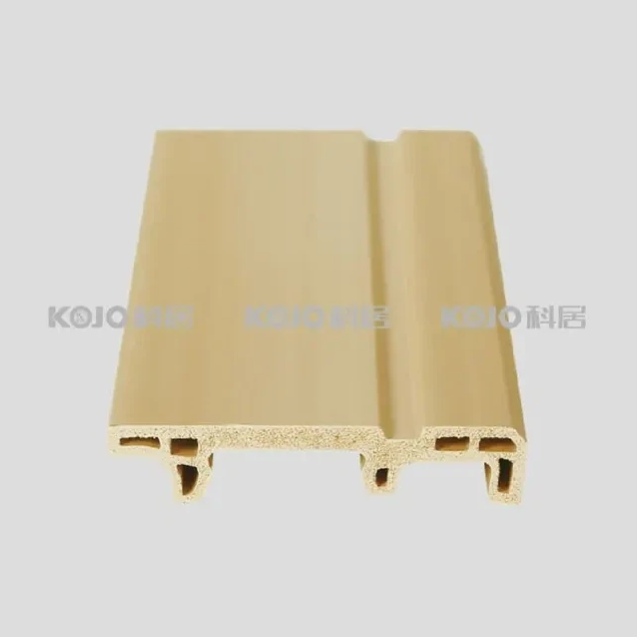
Choosing the right type of WPC skirting is essential for ensuring compatibility with floor heating systems. High-quality WPC skirting made from stable, dense materials will provide the best performance in environments with floor heating.
When selecting WPC skirting for installation with floor heating, look for boards made from high-quality, stable-composite materials. The composite should have a good density and strong molecular bonding to ensure resistance to warping, cracking, or other forms of deformation. High-density WPC skirting will be better equipped to handle temperature fluctuations and provide long-lasting performance.
One of the key factors in choosing WPC skirting for heated floors is ensuring that the skirting is manufactured to precise dimensions. Consistent dimensions help reduce uneven expansion stress that could otherwise lead to warping or gaps over time. High-quality WPC skirting, like that provided by KOJO, undergoes strict quality control to ensure uniform dimensions, contributing to a more stable and reliable installation.
Another consideration is the skirting’s finish and design. WPC skirting with a smooth finish and hidden fastener design is ideal for maintaining a clean, aesthetic appearance, even if slight movement occurs due to thermal expansion. These design features help ensure that the skirting remains visually appealing while providing the flexibility required for installation in environments with floor heating.
Once your WPC skirting is installed in a room with floor heating, it is important to perform periodic maintenance to ensure that it continues to perform well over time.
After the first few heating cycles, check the WPC skirting for any signs of warping, gaps, or loose edges. If you notice any issues, they may indicate that the expansion gap was too small or that the adhesive has not bonded properly. If necessary, reapply adhesive or adjust the skirting to ensure a secure fit.
To reduce the impact of temperature and moisture fluctuations on the WPC skirting, maintain a consistent level of humidity and ensure proper ventilation in the room. Excessive humidity can cause the material to expand or contract unnaturally, which may affect its performance. Keeping the room well-ventilated will help minimize these issues and extend the life of the skirting.
During seasonal temperature changes, it’s a good idea to periodically check the WPC skirting for any signs of stress or damage. This will help you catch any issues early and prevent them from becoming bigger problems in the future.
Installing WPC skirting in areas with floor heating requires careful consideration of expansion gaps and the materials used. By leaving a small expansion gap and choosing the right type of WPC skirting, you can ensure that your skirting will remain stable and functional despite the temperature fluctuations caused by the floor heating system. KOJO’s high-quality WPC skirting provides the perfect balance of durability, flexibility, and aesthetics, making it the ideal choice for heated floors.
For more information on our WPC skirting boards, contact us today!
Q1: Why is an expansion gap necessary when installing WPC skirting with floor heating?
A1: An expansion gap allows the skirting to move with the floor’s natural expansion and contraction caused by temperature fluctuations, preventing warping, buckling, or detachment.
Q2: How can I ensure my WPC skirting stays intact with floor heating?
A2: Use a flexible adhesive or fastening method, leave a proper expansion gap, and choose high-density WPC skirting that is resistant to warping.
Q3: Can I use standard WPC skirting for heated floors?
A3: It is recommended to use high-quality WPC skirting that has good density and stability to withstand temperature fluctuations and maintain its structure over time.
Q4: How do I maintain WPC skirting installed on heated floors?
A4: Regularly inspect the skirting for gaps or warping, maintain humidity and ventilation, and check periodically during seasonal temperature changes.


