Views: 0 Author: Site Editor Publish Time: 2025-12-18 Origin: Site
When undertaking a renovation or DIY project, especially when installing WPC skirting in spaces with complex structures like inside corners, knowing the right cutting and installation techniques is crucial. Uneven cuts or poorly installed corners can lead to gaps, visible seams, and an unsightly finish. In this guide, we will explore the best tools and techniques for cutting WPC skirting for inside corners, ensuring a professional and polished installation every time. KOJO, a leading manufacturer of WPC skirting, offers high-quality skirting boards designed for easy installation and long-lasting performance.
The appearance and functionality of WPC skirting are greatly influenced by the accuracy of the cuts, particularly when it comes to inside corners. Improper cutting can lead to visible seams and gaps, which not only detract from the overall aesthetic but can also compromise the skirting's protective function.
If the skirting is not cut accurately, it will result in visible seams and gaps between the boards. These imperfections can make the installation look unprofessional and lead to dust and moisture accumulation in the gaps. Over time, this can affect the integrity of the skirting and make it more susceptible to damage. Furthermore, if the skirting is not properly sealed at the corners, it can impact the moisture resistance and prevent the skirting from offering full protection to the walls and floors.
Inside corners are particularly tricky when installing skirting. The angle of the corner must be measured and cut precisely to ensure a tight, seamless fit. Even a small miscalculation can lead to unsightly gaps and a poor finish. Therefore, it’s crucial to take extra care when measuring and cutting skirting for inside corners to ensure the best result.
The right tools can make a significant difference when cutting WPC skirting. While WPC materials are generally easier to work with than natural wood, using the proper tools will ensure cleaner cuts and a smoother installation.
To cut WPC skirting, you can use a variety of standard woodworking tools, depending on the complexity of the cuts. A fine-tooth saw or a utility knife can be used for straight cuts, while a miter saw is the ideal tool for making angled cuts. The fine teeth of a miter saw allow for a clean, smooth cut, which is particularly important for achieving a polished finish in corners.
For cutting WPC skirting at precise angles, a miter box or miter saw is highly recommended. This tool helps to create consistent, accurate cuts at a variety of angles, such as the standard 45° or 90°, as well as custom angles for more complex corners. Using a miter saw ensures that the angles are exact, reducing the chances of errors when fitting the skirting in place. A miter box is particularly useful for DIY enthusiasts who may not have access to a miter saw but still need to make precise angle cuts.
WPC skirting has several advantages over traditional wood when it comes to cutting. Unlike natural wood, which can splinter and chip when cut, WPC skirting tends to remain intact with clean edges. The composite material is less prone to breaking or splintering, making it easier to work with and ensuring that you get a professional finish every time. Additionally, WPC skirting is less likely to warp or shrink, providing a stable, durable material that will maintain its shape over time.
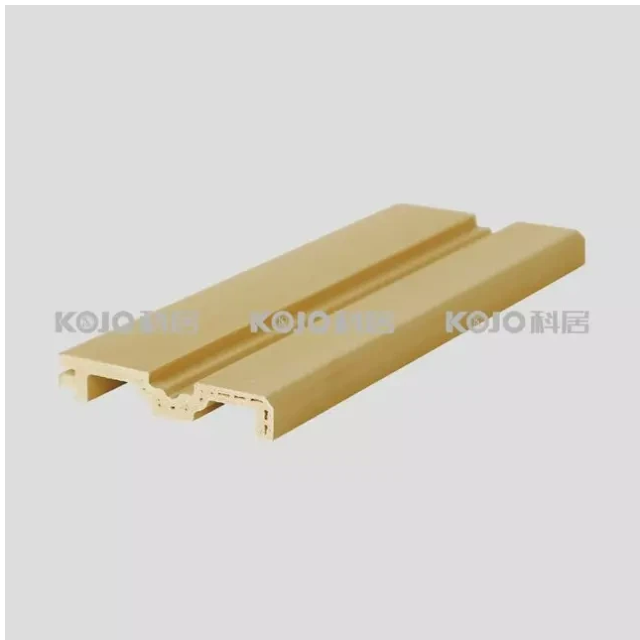
Cutting WPC skirting for inside corners requires precision and attention to detail. Follow these steps to ensure that your installation is flawless:
The first step in cutting WPC skirting for inside corners is to measure the angle of the corner accurately. The typical angle for an inside corner is 90°, but many rooms will have corners that are slightly off this angle. Use an angle finder or a protractor to measure the exact angle of the corner. Once you have this measurement, you can adjust the miter saw to the correct angle to make an accurate cut.
Before cutting the skirting, mark the cutting lines on the back of the board. Be sure to account for the grain direction and the finish side of the skirting. The finish side should face outward, while the back of the skirting will be cut to fit. This will ensure that the skirting fits perfectly along the wall and provides a clean, professional finish.
Once the skirting is marked, use the miter saw or fine-tooth saw to cut along the lines. Take care to make smooth cuts, following the grain of the material. After cutting, use a file or sandpaper to smooth any rough edges or corners. This will ensure that the skirting fits snugly without any sharp edges or splinters.
Before final installation, dry-fit the skirting to check that the cuts are accurate and that the skirting fits securely in the corner. If necessary, make adjustments to the cuts. Once satisfied with the fit, apply the appropriate adhesive or secure the skirting with concealed nails. Be sure to press the skirting firmly into place to ensure a secure bond with the wall.
While cutting WPC skirting may seem straightforward, there are some common mistakes that can affect the installation. By being aware of these mistakes and how to avoid them, you can ensure a successful project.
One of the most common mistakes when cutting for inside corners is mis-measuring the angle of the corner. Even a slight discrepancy can lead to gaps or mismatched cuts. To avoid this, always use an angle finder to measure the corner accurately before cutting. Take extra care with corners that are not perfectly 90°.
Cutting WPC skirting too deep or with too much force can cause the edges to chip or result in an uneven finish. Always use a fine-tooth saw or miter saw for clean, controlled cuts. Additionally, avoid pressing too hard on the material when cutting, as this can cause damage.
Another important consideration is the expansion gap. WPC skirting expands and contracts with changes in temperature and humidity, and failing to leave the necessary gap can lead to stress on the skirting and wall. Be sure to leave a small gap at the top of the skirting to allow for expansion. This is particularly important if you are installing the skirting near flooring that may expand or contract.
KOJO’s WPC skirting is designed with ease of installation in mind. Our high-quality skirting boards are made from durable, stable composite materials that reduce the risk of cracking or chipping during cuts, making them ideal for inside corners.
KOJO’s WPC skirting is manufactured with a consistent composite structure that ensures stable, uniform performance. This reduces the risk of damage during cutting, providing a smooth, clean finish even in challenging corner installations.
Our skirting boards come with a pre-finished surface, which means that once the cutting is complete, there is less need for sanding or rework. This helps maintain the professional look of the skirting and saves you time during the installation process.
KOJO’s WPC skirting is designed to work seamlessly with standard woodworking tools. This makes it accessible for both professional installers and DIY enthusiasts, allowing for quick and easy installation without the need for specialized equipment.
With the right tools and techniques, cutting and installing WPC skirting for inside corners can be a straightforward task, even for non-professionals. KOJO’s high-quality WPC skirting simplifies this process, offering a material that is easy to cut, stable, and resistant to damage. Whether you are a DIY enthusiast or a professional installer, KOJO’s WPC skirting is the perfect solution for creating smooth, clean finishes in challenging corner installations.
For more information on our WPC skirting boards, contact us today!
Q1: How do I measure the angle for inside corner cuts?
A1: Use an angle finder or protractor to measure the exact angle of the corner, ensuring an accurate cut and a snug fit.
Q2: What tools are recommended for cutting WPC skirting?
A2: A miter saw or fine-tooth saw is ideal for cutting WPC skirting, with a miter box offering precision for angle cuts.
Q3: Can I cut WPC skirting myself?
A3: Yes, WPC skirting is easy to cut with standard woodworking tools, making it suitable for DIY installations.
Q4: Why should I leave an expansion gap when installing WPC skirting?
A4: An expansion gap allows for the natural expansion and contraction of the material, preventing stress and ensuring long-term durability.


